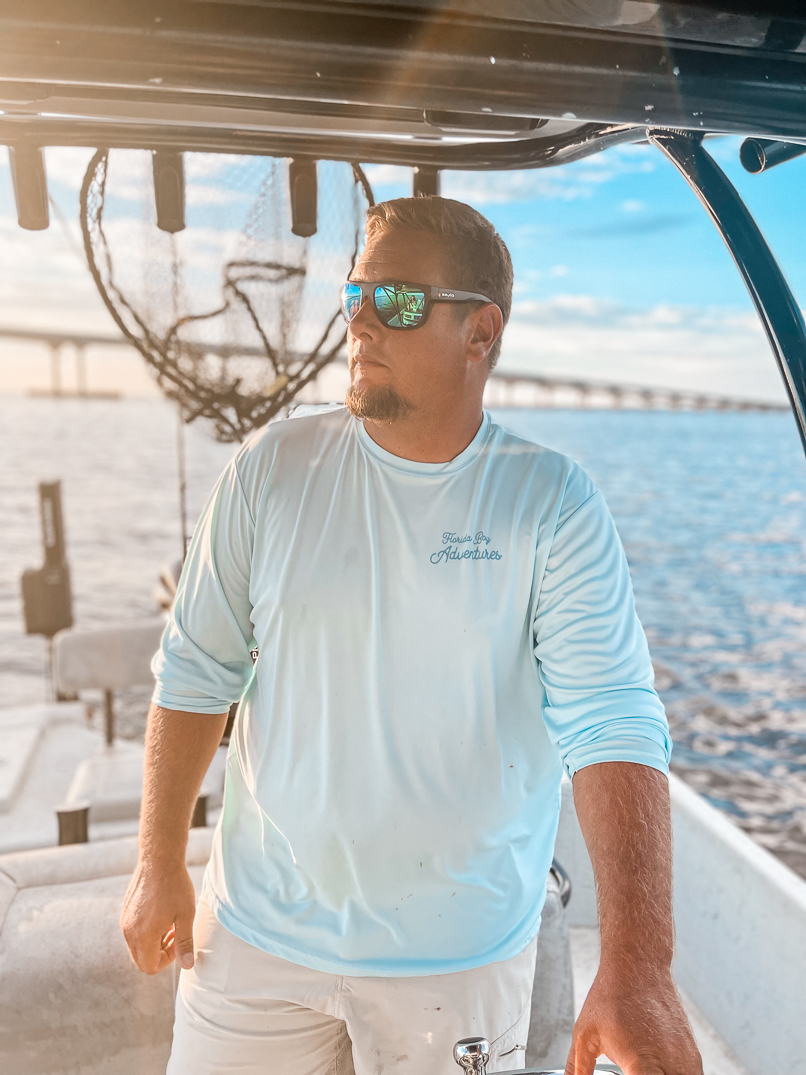
Long before 30A found its way on travel lists and dreamy escapes, fishing guide Captain Hunter Ray was a legacy in the making. The Rays were already rooted here living a quiet, coastal life grounded in generosity, resilience and resourcefulness. For decades, they worked diligently through changing seasons, early mornings, long days and a deep respect for the nature around them. By learning the rhythms of the land and water around them, dragging nets, and sharing their bounties with those around them, there was a humble pride in the grit of it all. While the same stretch looks different than it did 100 years ago, Captain Hunter Ray carries those same handed-down sensibilities forward every day.
There is a road in Walton County, Florida, that runs right along the bay, parallel to Highway 98 in Santa Rosa Beach, connected enough that most people who spend a week on 30A drive by it or on it at least once. It’s right there at the foot of the bridge, the first intersection entering south Walton or the last if you’re leaving. Recent transplants and the steady stream of visitors driving past it on a daily basis likely cruise by without giving the name on the sign a second thought.
It’s Chat Holley Road. And the majority of those who have arrived here in the last decade probably don’t know who Chat Holley was.
Hunter Ray does. He is Chat Holley’s great-grandson. And that distinction — knowing whose name is on the road everyone else just drives down — is as good a place as any to begin understanding what separates him from the wave of newbies that has arrived in this stretch of Florida alongside the vacation rentals and the realtors and the glossy version of 30A that the rest of the country has discovered.
Chat Holley was Hunter’s great-great-grandfather. He was an avid outdoorsman who hunted and fished the same South Walton beaches and woods for most of his life, and who, by all accounts, never met a stranger. He raised kids including a daughter Kathrine, who married a man Charles Ray of West Bay, and together they made their family home on a a quiet street on the shore of Choctawhatchee Bay, far from the beach crowds and well before they arrived. (And if you’re curious not a single person referred to the area as 30A back then, that’s a modern-day marketing locator.)
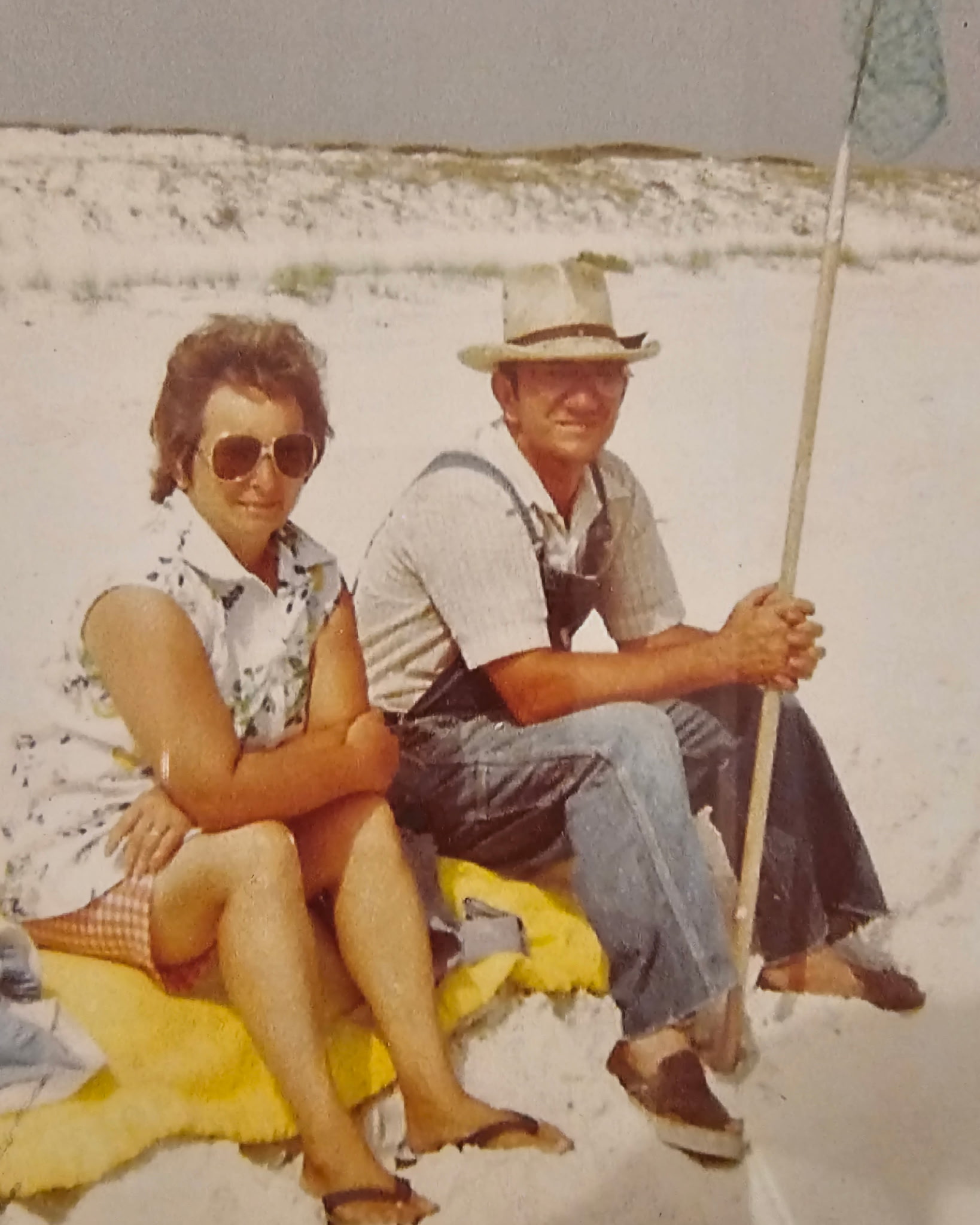
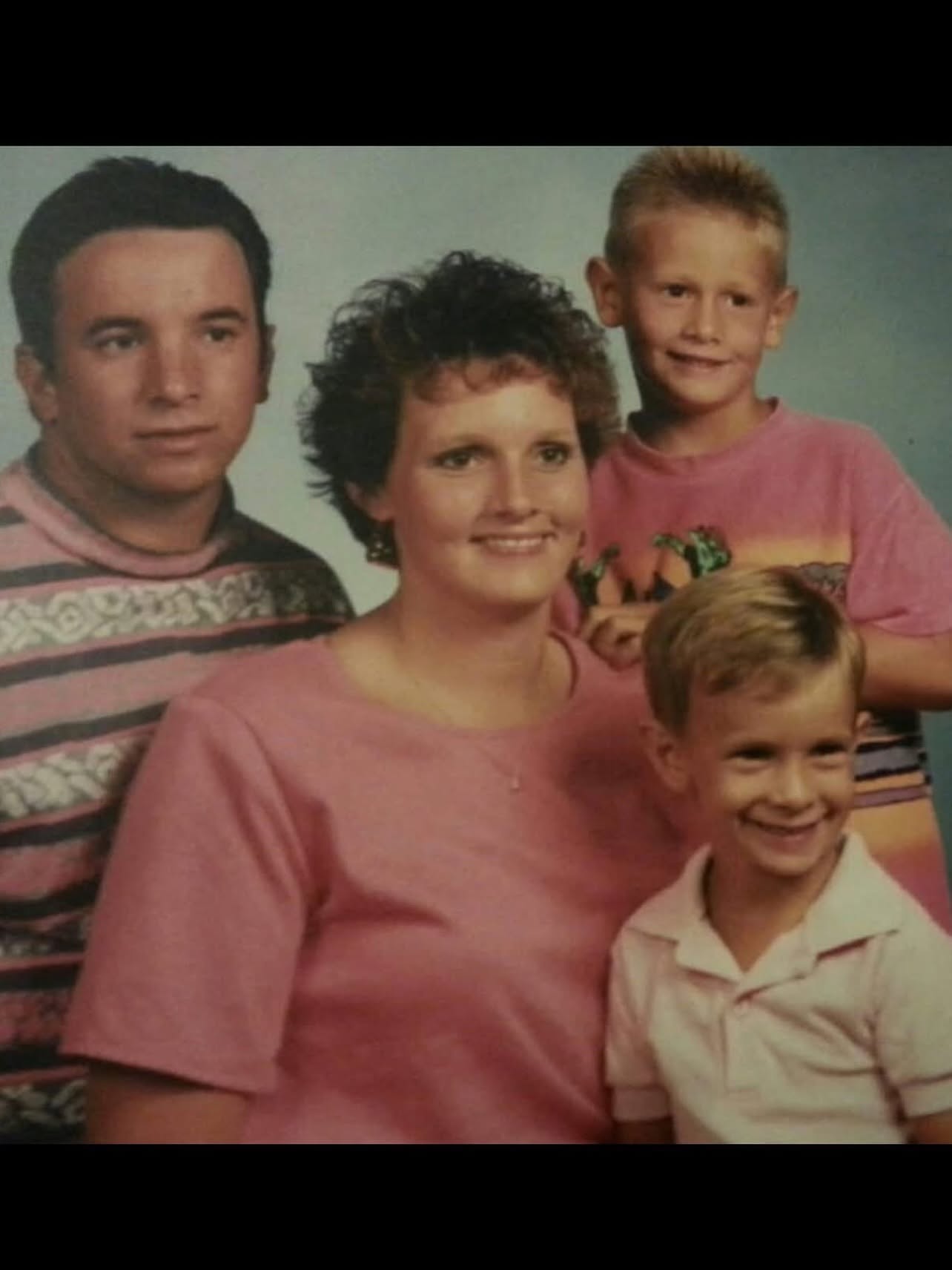
Charles and Kathrine built a life the old way: working the land, raising their children, and running a modest nursery that supplied what the region needed to grow. Kathrine was a second mother to many, helping with childcare and raising kids as often as she grew vegetables. She had a true green thumb and what the garden and the water provided went straight to the table. Kathrine presided over that table with the authority of a woman who had fed hungry men all her life — and she had. She knew, without asking, exactly what each of them wanted. Her husband Charles. Her son Gilbert. And eventually, her grandsons Hunter and Chase, Gilbert’s two boys, who grew up on Chat Holley Road playing Davy Crockett in the woods and tearing around the property in little Power Wheels cars as if they were their own hunting trucks.
She made a different meal for each one.
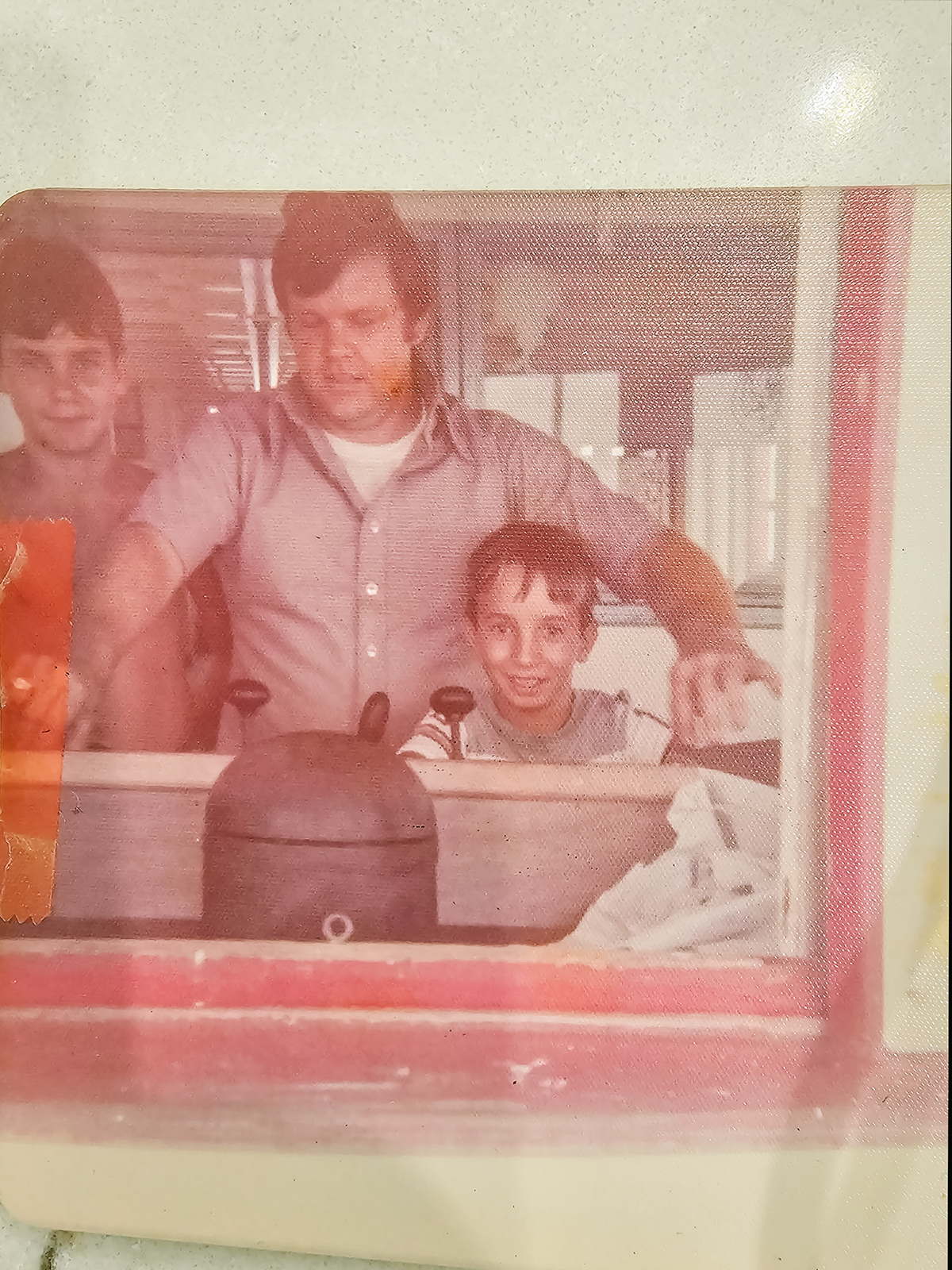
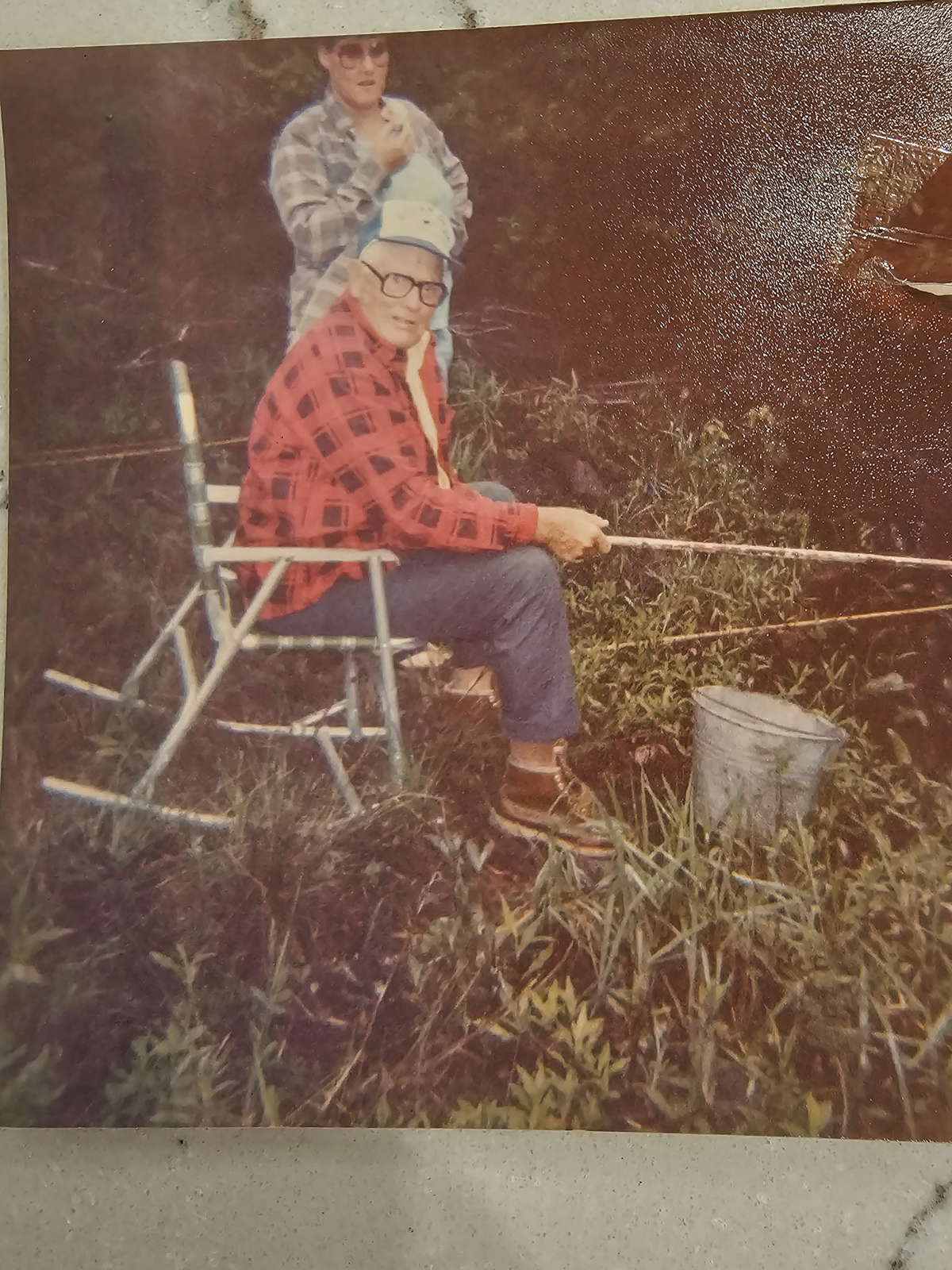
Gilbert grew up watching his father work a dedicated career at Eglin Air Force Base with his dad’s spare moments spent in the nursery or on the water, he learned to pay attention to detail, notice rhythms of the seasons, and eventually found his own way to make the most of living from the land and the water.
After the first 2 cold fronts of the year plus a good north wind, Gilbert and his dad would flounder in the bay or grab his friends and launch the boat to flounder off of the beach. Back then, you could drive or launch from just about anywhere on the beach and they’d flounder til they had a cooler full then spend all day cleaning their catch. That stash could last all winter in a place you had to cross a bridge to do most of your grocery shopping. Those habits were a part of the small town beach life.
There was always a project going on. Amassing a collection of local Indian arrowheads found in the woods and water near Bay Drive or Mack Bayou was one. Starting a lawn service business for the growing number of people with second homes was another. And for years, taking on the art and business of bay shrimping was another.
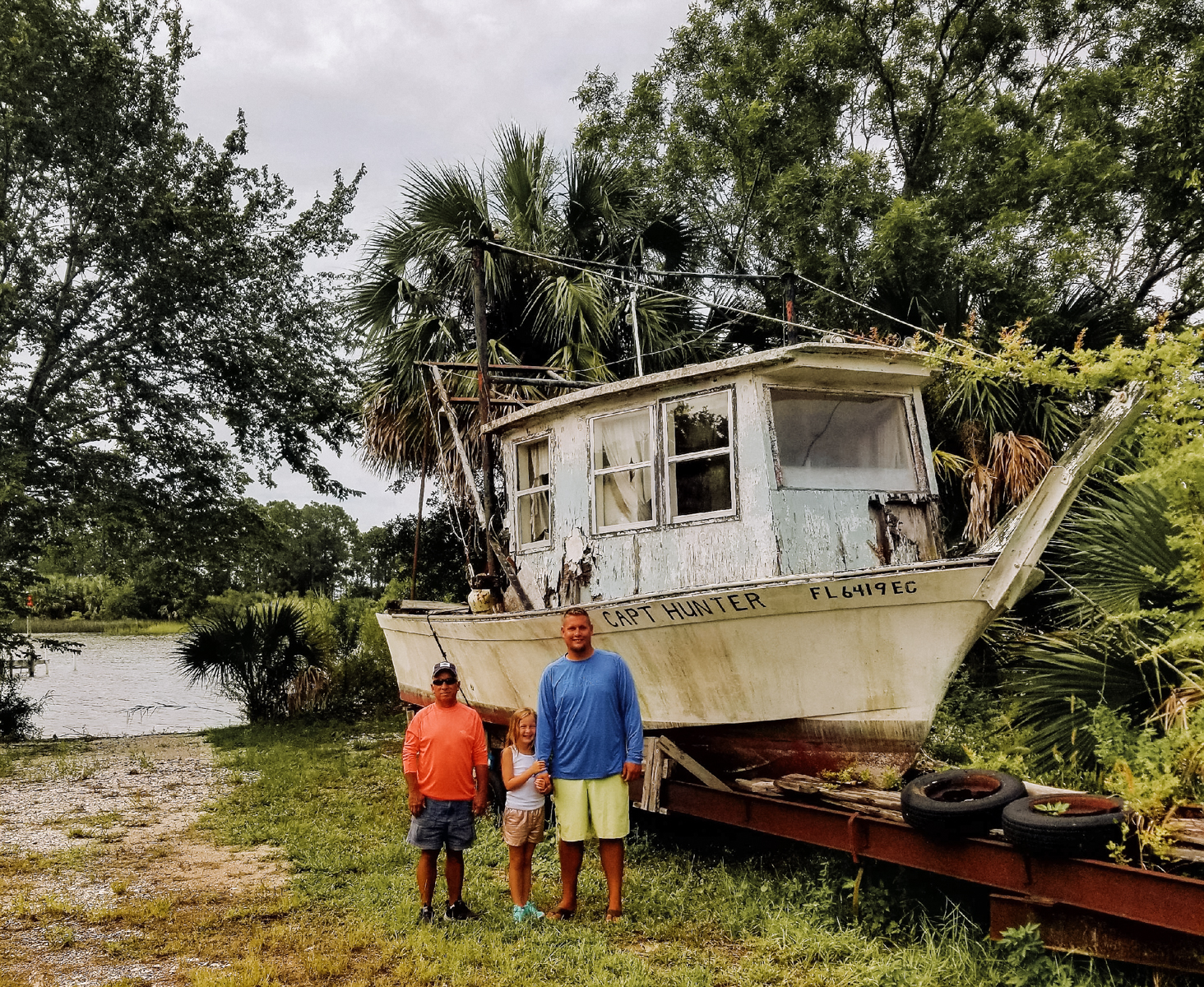
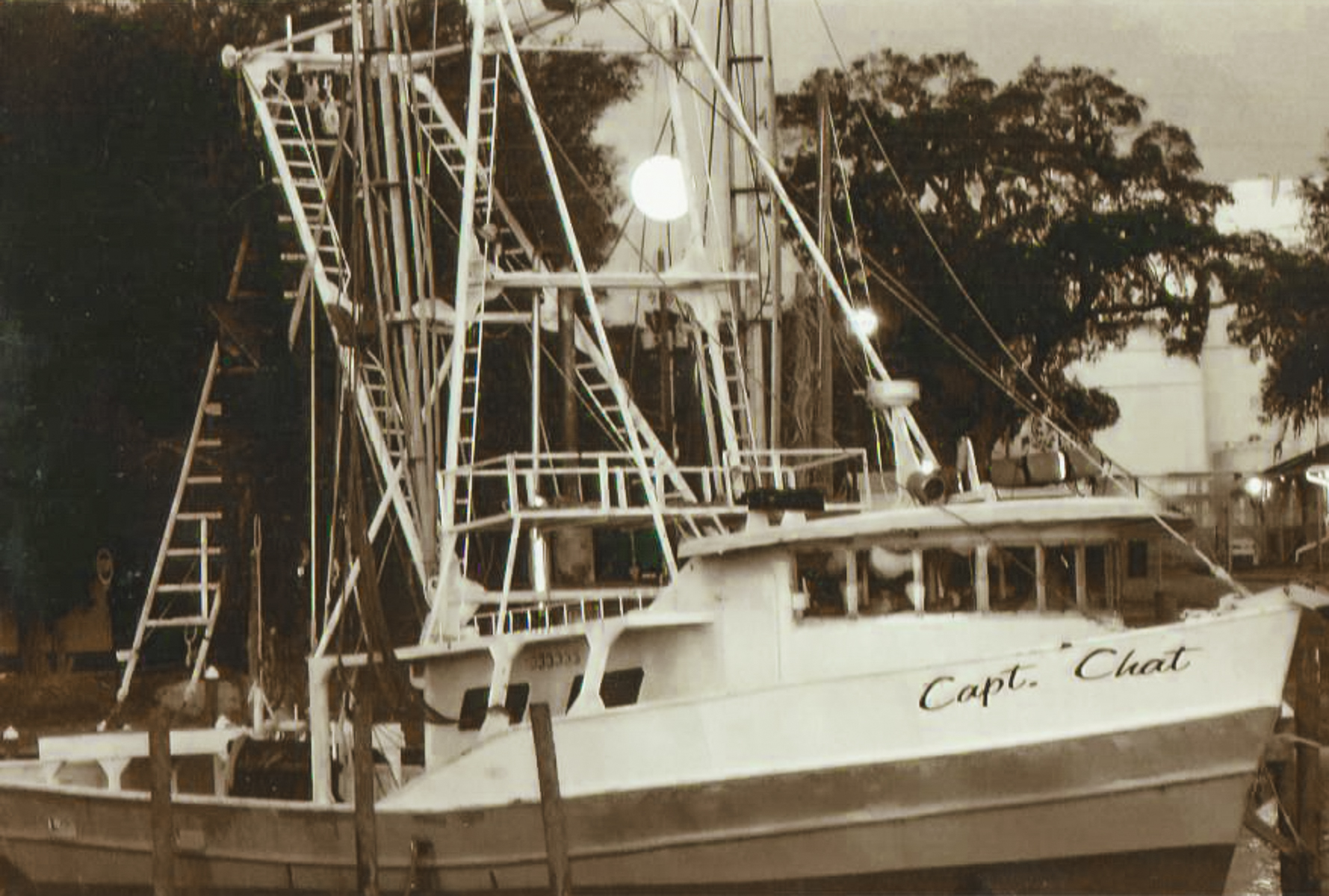
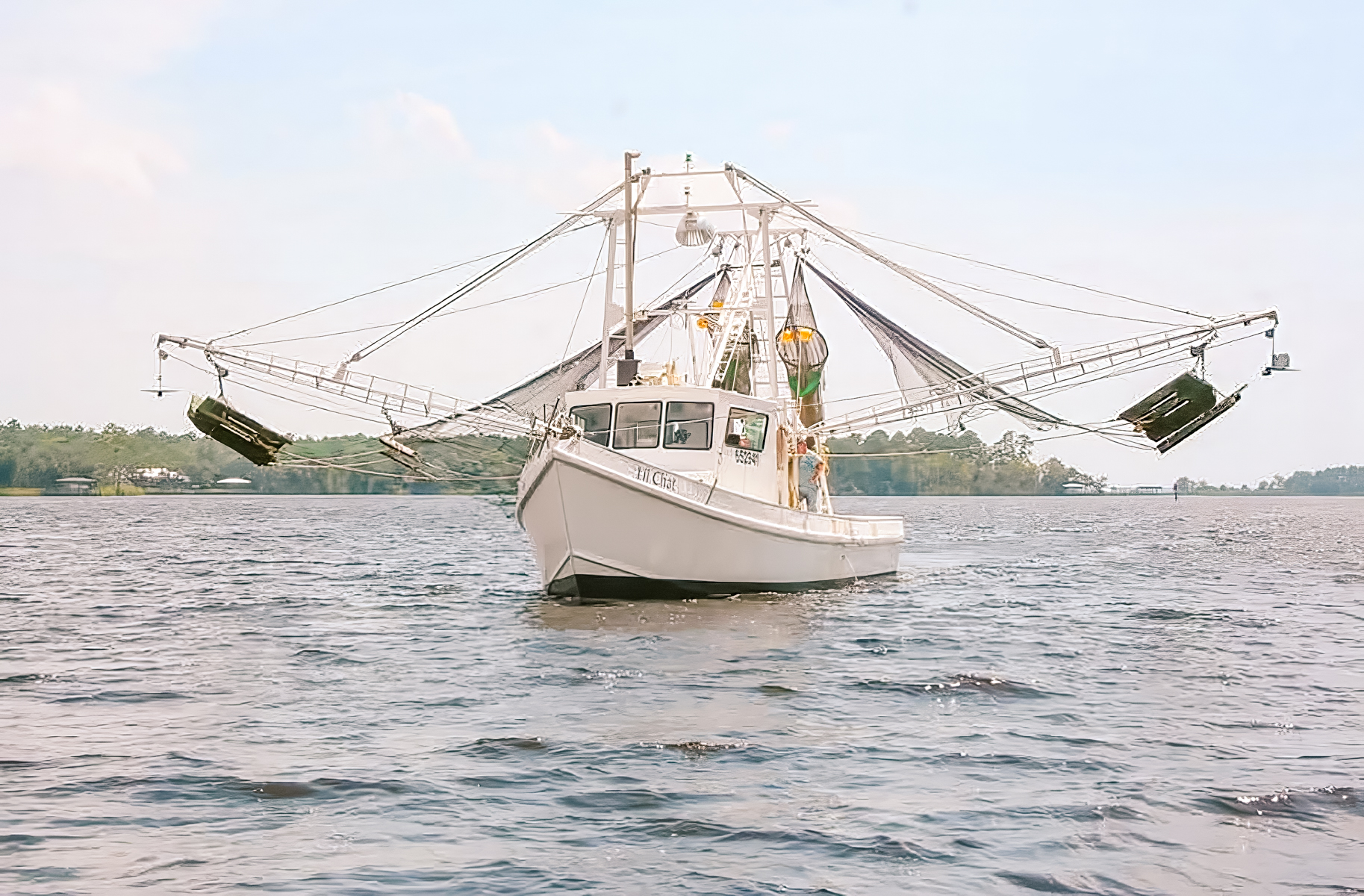
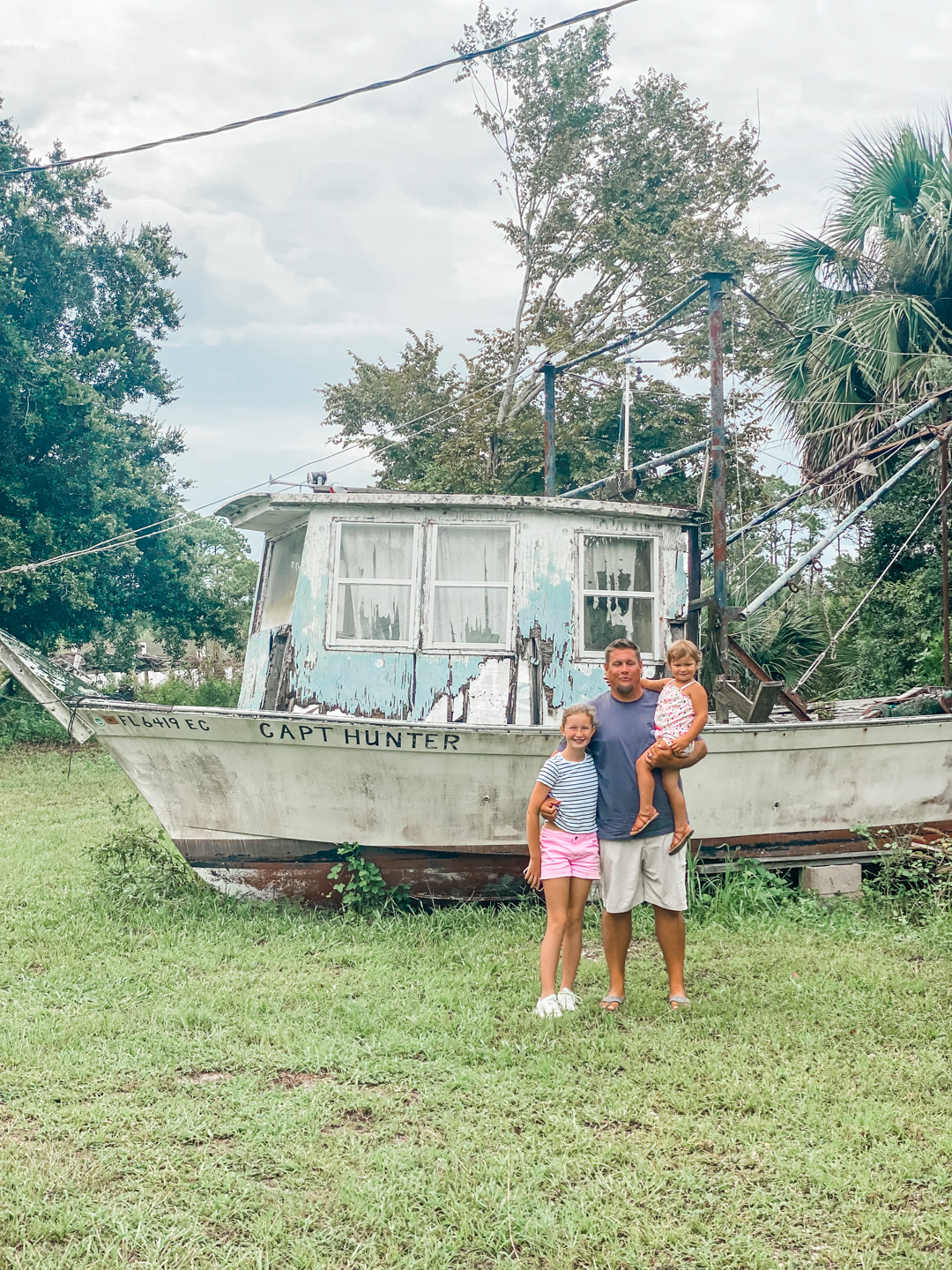
The first boat was called the Capt Hunter and was built by hand by Charles and Gilbert as a tribute to the next generation. As they upgraded the boat that followed, the bigger vessel was named in the way of Southern families who honor their elders quietly and practically, for Chat Holley himself. There was the Captain Chat then eventually the Lil Chat. The Ray family ran those on all-night, all-hands shrimping runs down the Choctawhatchee, dragging nets through the dark water while the rest of Walton County slept. It was, as anyone who has done it will tell you, a particular kind of work: long stretches of waiting broken suddenly by the hard, wet labor of hauling in a full net, sorting the catch by hand, bagging it in the dark, then turning for home just as the sky began to lighten over the pines. To Hunter and Chase, it was an adventure and a chore like the equivalent of having to do dishes and laundry,
They’d pull in at dawn and clean the boat from stern to bow before they could rest. Then they’d sell the shrimp to their network of friends and family until they ran out. Small talk and sharing stories from the boat has always been part of the family DNA.
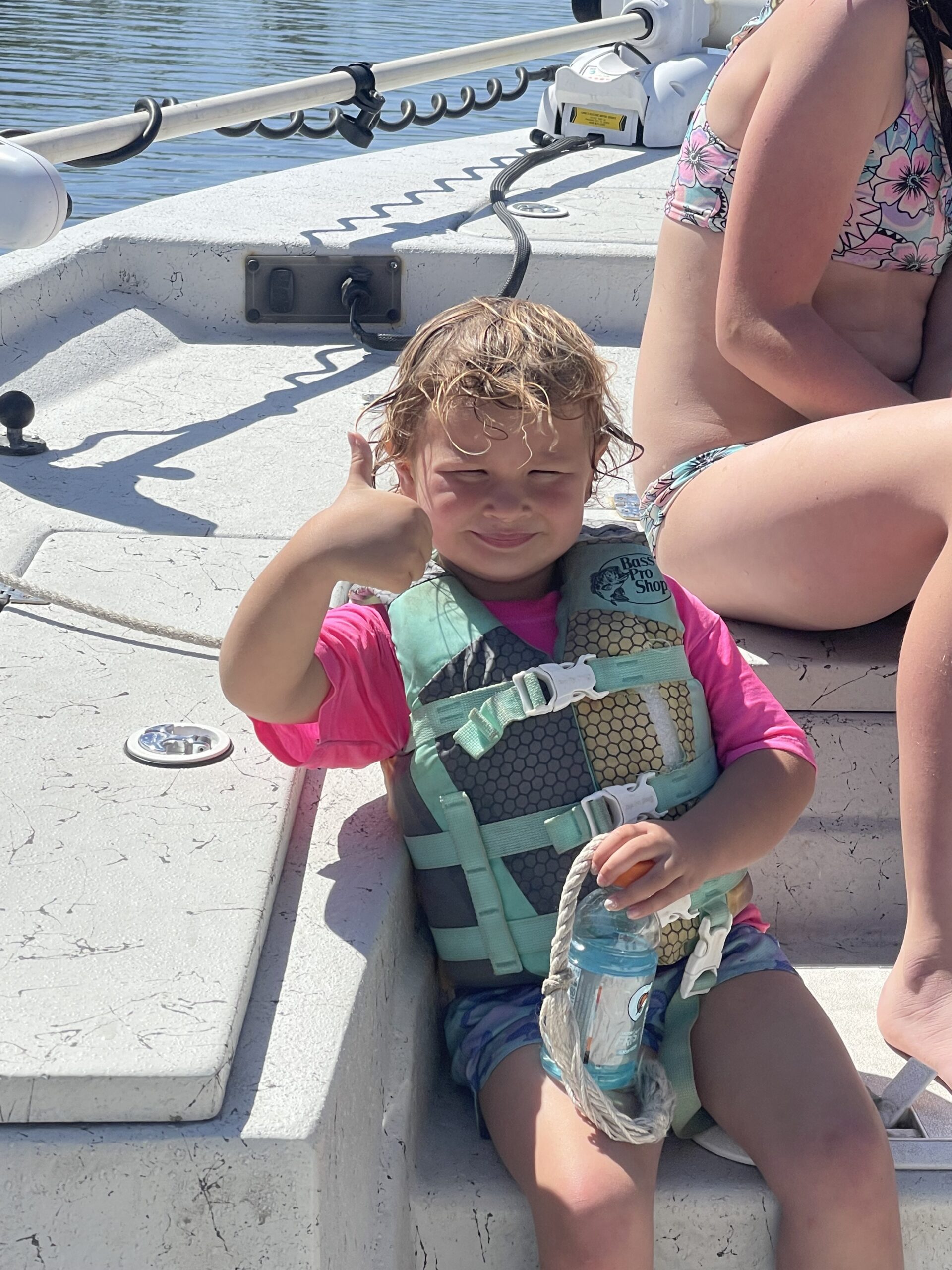
Being resourceful outdoors is equally engrained in the crew. There is a photograph of Hunter on the deck of the Capt. Hunter when he was two years old, showing just how early a start his habits began.
Absorbing the intel was part of life, not so much a rite of passage but an ongoing education. There was never a formal sit-down from generation to generation, but when an elder gave advice or instructions, it was best to listen.
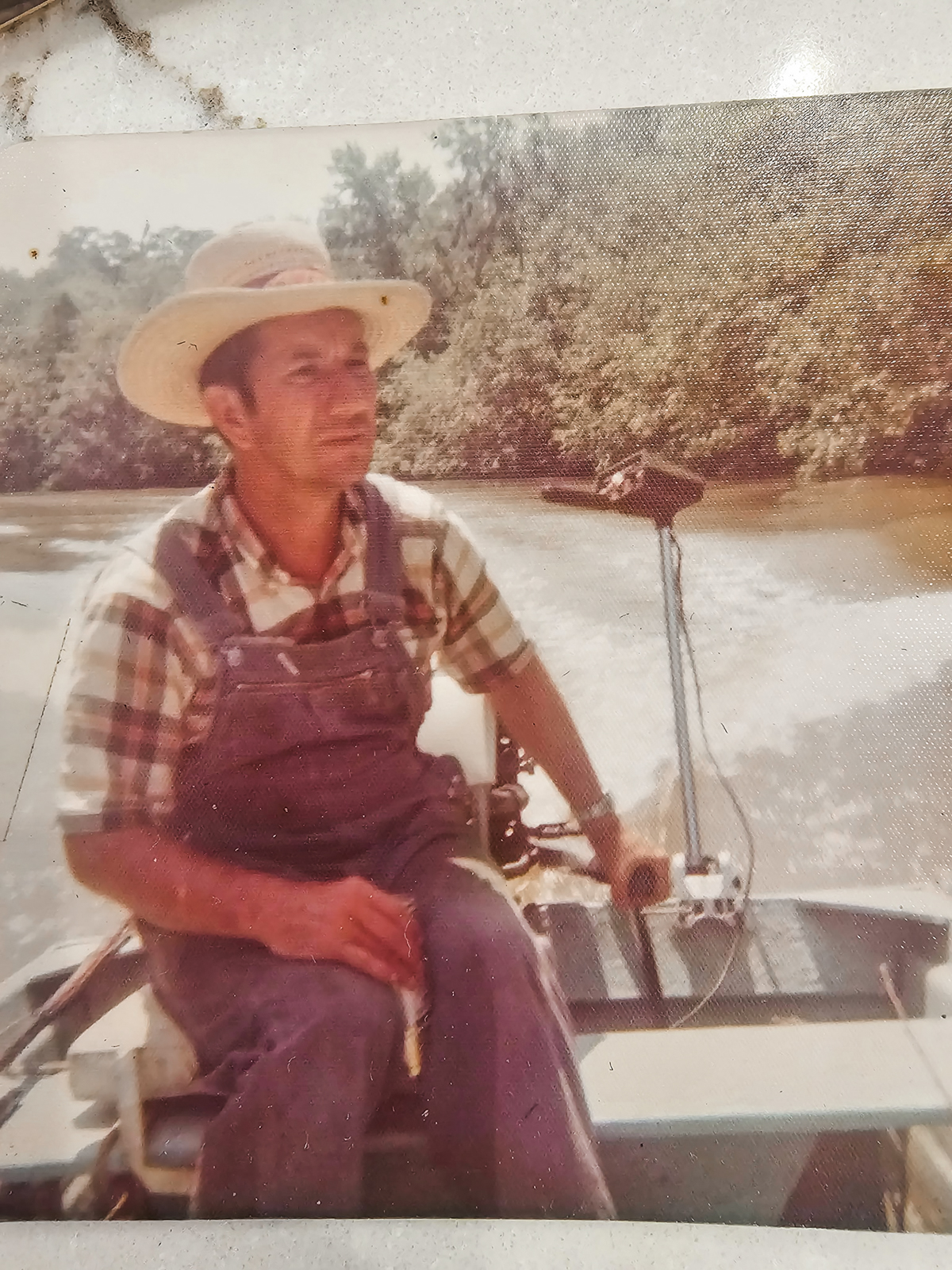
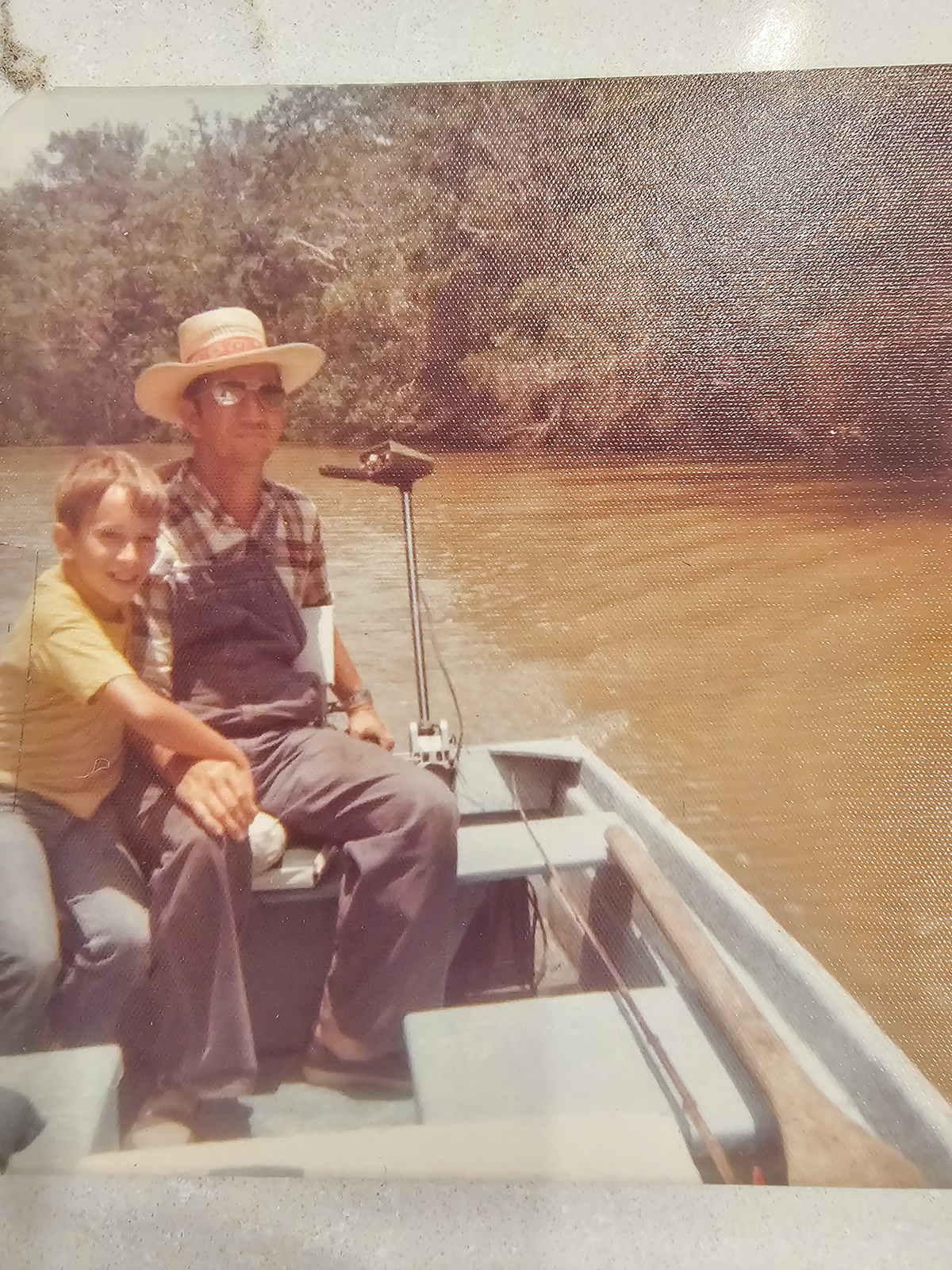
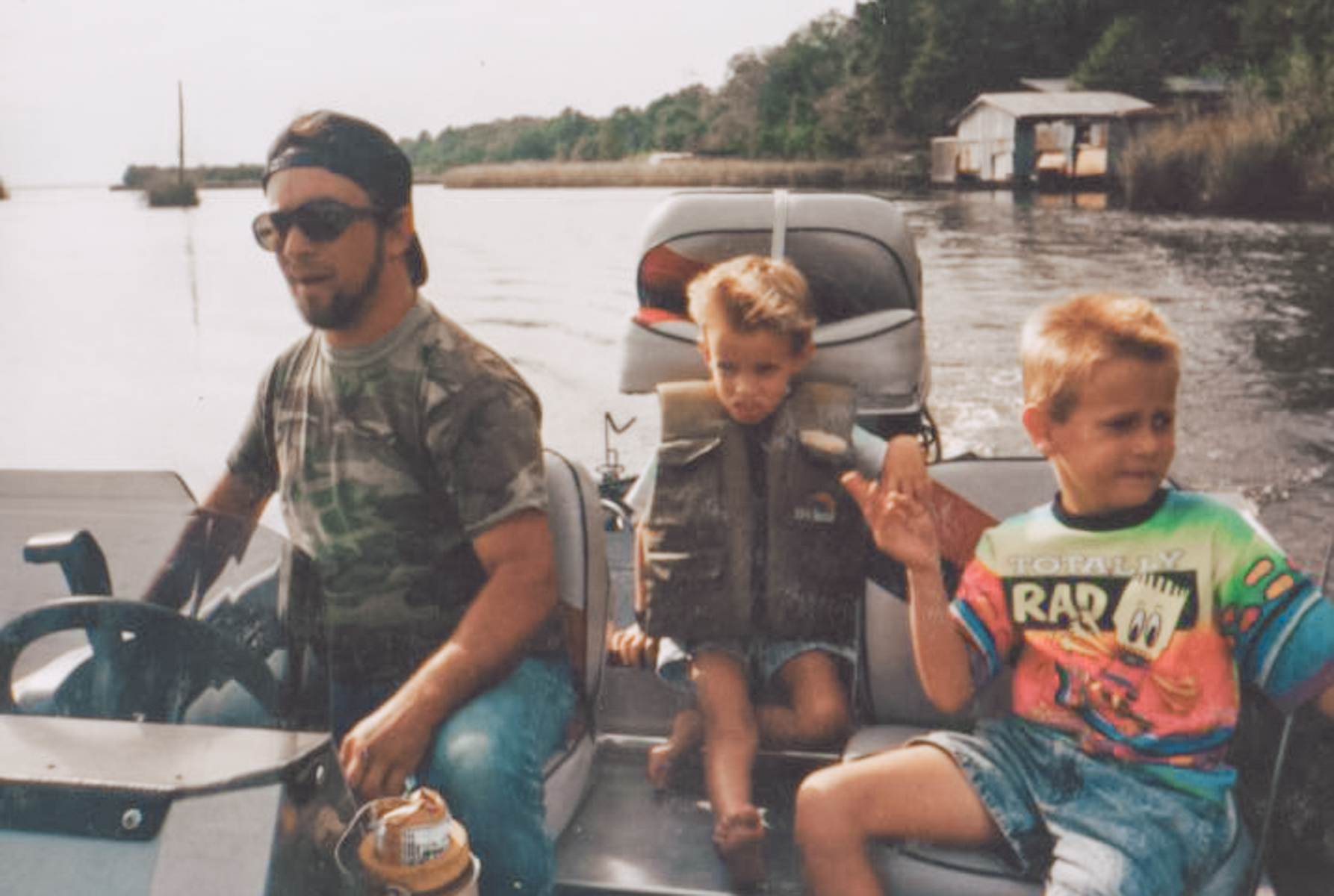
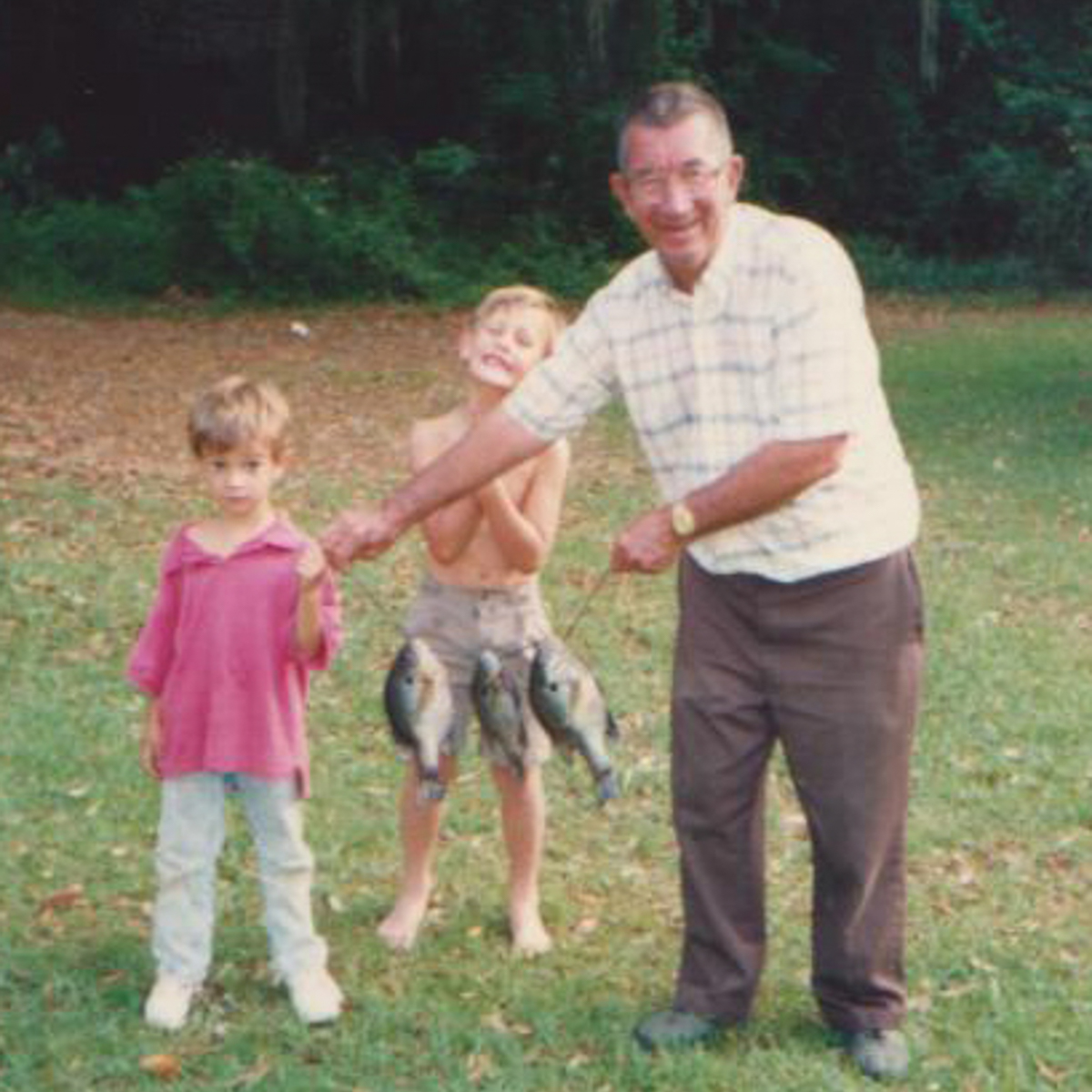
Hunter grew up catching bait before school, grabbing a rod as soon as he got home and fishing the Choctawhatchee River with his grandpa Charles on weekends. (While Charles never officially became a licensed guide, he spent time serving as an unofficial guide in his teen years for locals and visitors around West Bay). Fast forward to the late 90s. Hunter learned to read water the way other children learn to read books, by doing it, over and over, until the knowledge stopped being conscious and became something closer to instinct. He learned to pancake a cast net like an old timer long before the years would’ve given way to that kind of skill. He learned which bend in a creek holds fish on a falling tide and why. He learned how easily he could trade a cooler of fresh caught mullet to those who treasure it fried whole with a crispy tail. He learned which spots produce because of what happened there decades ago like the spot where a boat sank, settled into the grass flat and became home to every species that the bay has to offer.
He learned things that cannot be found on an app, a satellite map, or a ten-day fishing forecast.
Becoming a guide here was a mix of destiny and determination. It was on those late night shrimping runs that Hunter and Chase spent many hours talking about starting their own fishing charter one day. Freeport High School had a long standing senior class trip to the Keys and Hunter had somehow gotten an invite to join as a freshman. Watching the salty guides of the islands recount their day at The Lorelei during his visit and the realization that being a guide could be a real job stuck with Hunter.
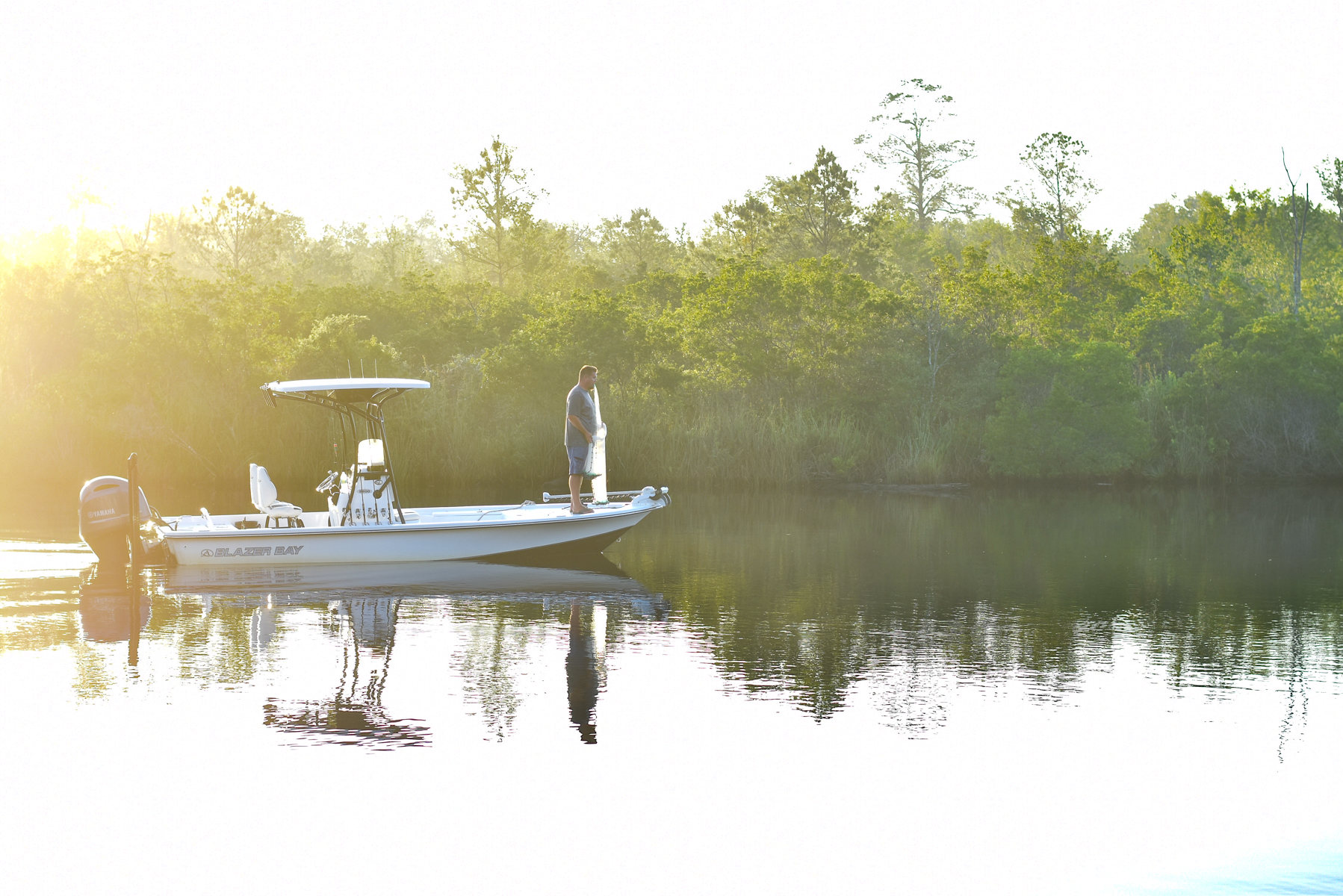
By the time Hunter launched Florida Boy Adventures in 2010, the world around Choctawhatchee Bay was already changing fast. He was newly married, and his wife Jami helped build the business from the ground up with a website, a booking system, and the social presence to tell the story. It was a partnership that made sense. She took the pictures and he knew every grass flat and oyster bar between Destin and Niceville.
What followed was not an overnight success story so much as a decade-plus of showing up, every single morning, before dawn.
Hunter is typically out the door by 5 a.m. with something of a permanent tan line from his flip flops. He catches live bait before his first clients are even awake. He runs trips through the heat of a Florida summer and the humid fall days, even into the cold snaps of winter break, and he often doesn’t come home until after sunset. He has run 370 trips in a single year. His father Gilbert, watching his son’s business grow, eventually got his own captain’s license. The Ray family, as it has always done, found a way to pass the work forward.
This is perhaps the thing that separates Hunter most visibly from the wave of new guides that has washed over the Emerald Coast in the last decade. 30A’s explosion, including the rental homes, the new businesses, the travel accolades, the high-end real estate flips, the glossy Instagram presence that turned a two-lane road into a cultural phenomenon brought with it a corresponding growth in charter fishing. New operators arrive every season, some with experience elsewhere and some without much more than the desire for an exciting new start.
Hunter, at his core, is a community man. He’s the kind of guy who “knows a guy” or has a buddy in nearly any industry or state or tax bracket. He’s a talker and he’s connected. But he will tell you, if you ask, that there is a difference between knowing a fishing spot and knowing why it fishes. The newer boats sometimes cluster around wherever they see another boat anchored — reasonable logic, until you understand that the Florida Boy Adventures family might be working that location because they know a little piece of history carefully charted in the memory bank that tells them when, where or why it’s a smart choice.
That knowledge is not transferable. It is inherited.
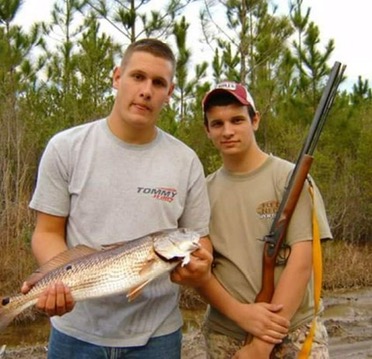
What is also not transferable is what Hunter lost in 2009, the year before Florida Boy Adventures launched. His brother Chase, his other half and lifelong hunting and fishing buddy died at age 21 from complications related to swine flu. It’s something you can’t see coming. He was young and healthy and then he was gone, the kind of loss that recalibrates everything for the people left to carry on.
Hunter carries on. He rises every morning like the bay expects him to, because it does.
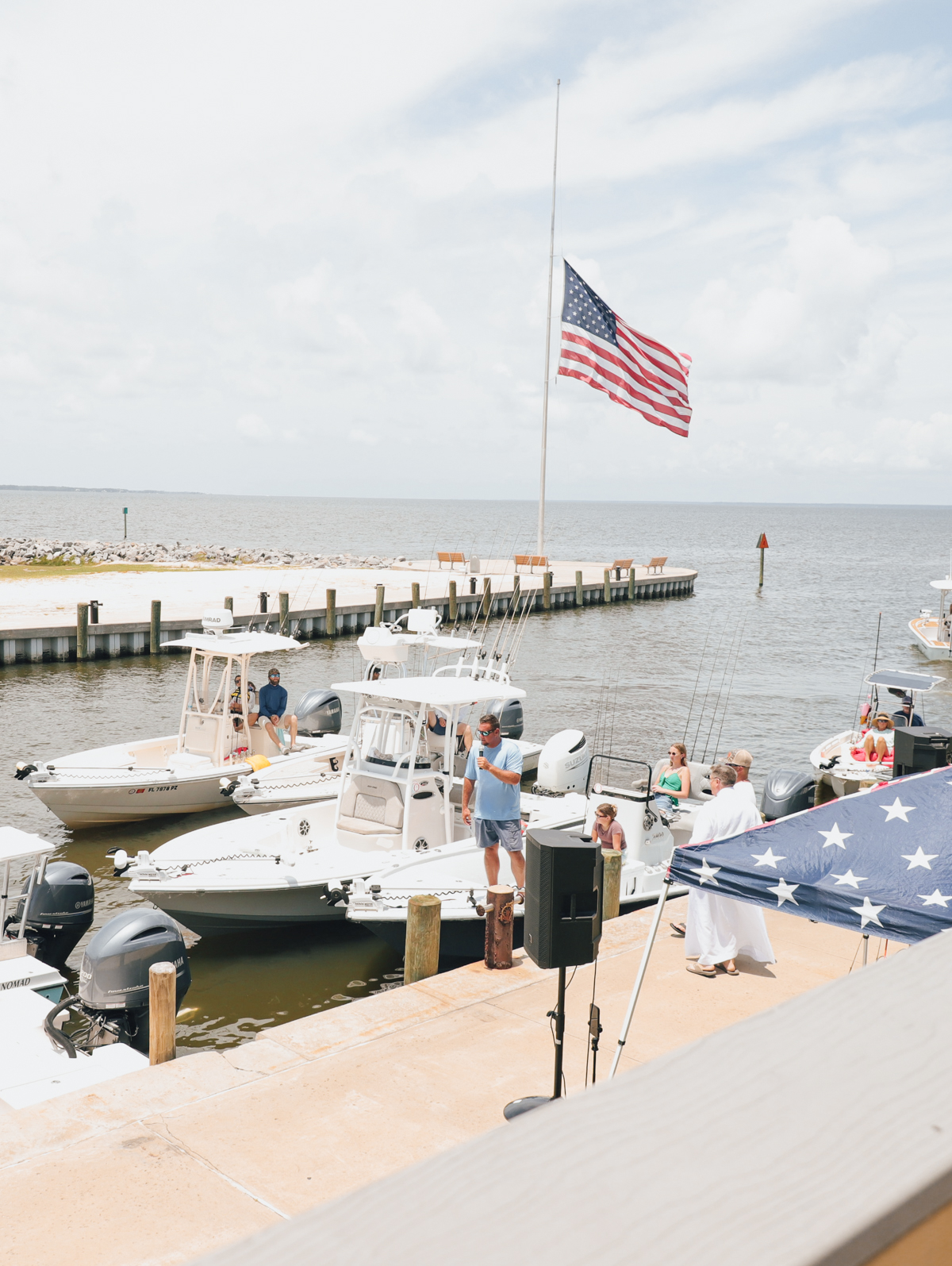
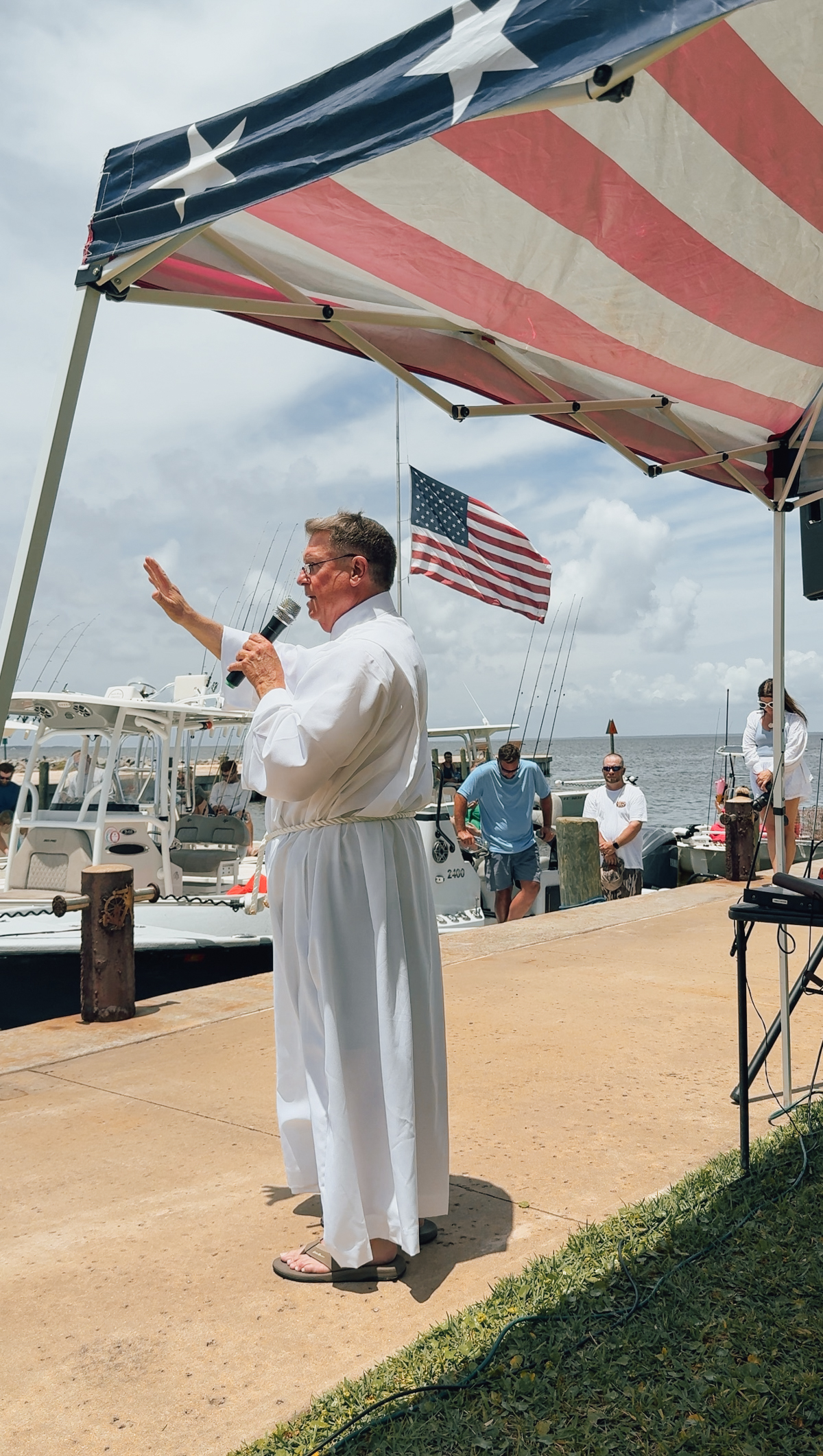
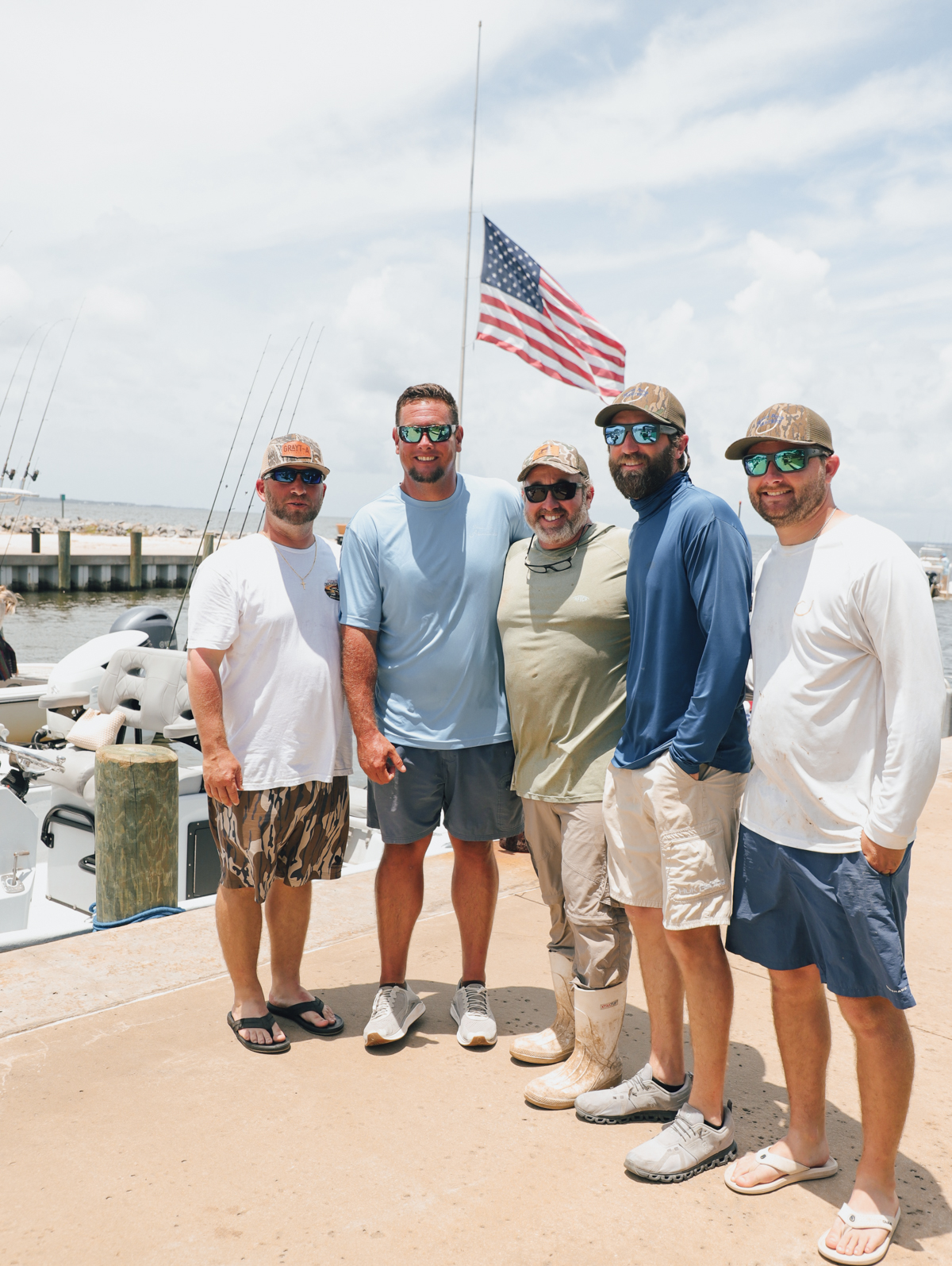
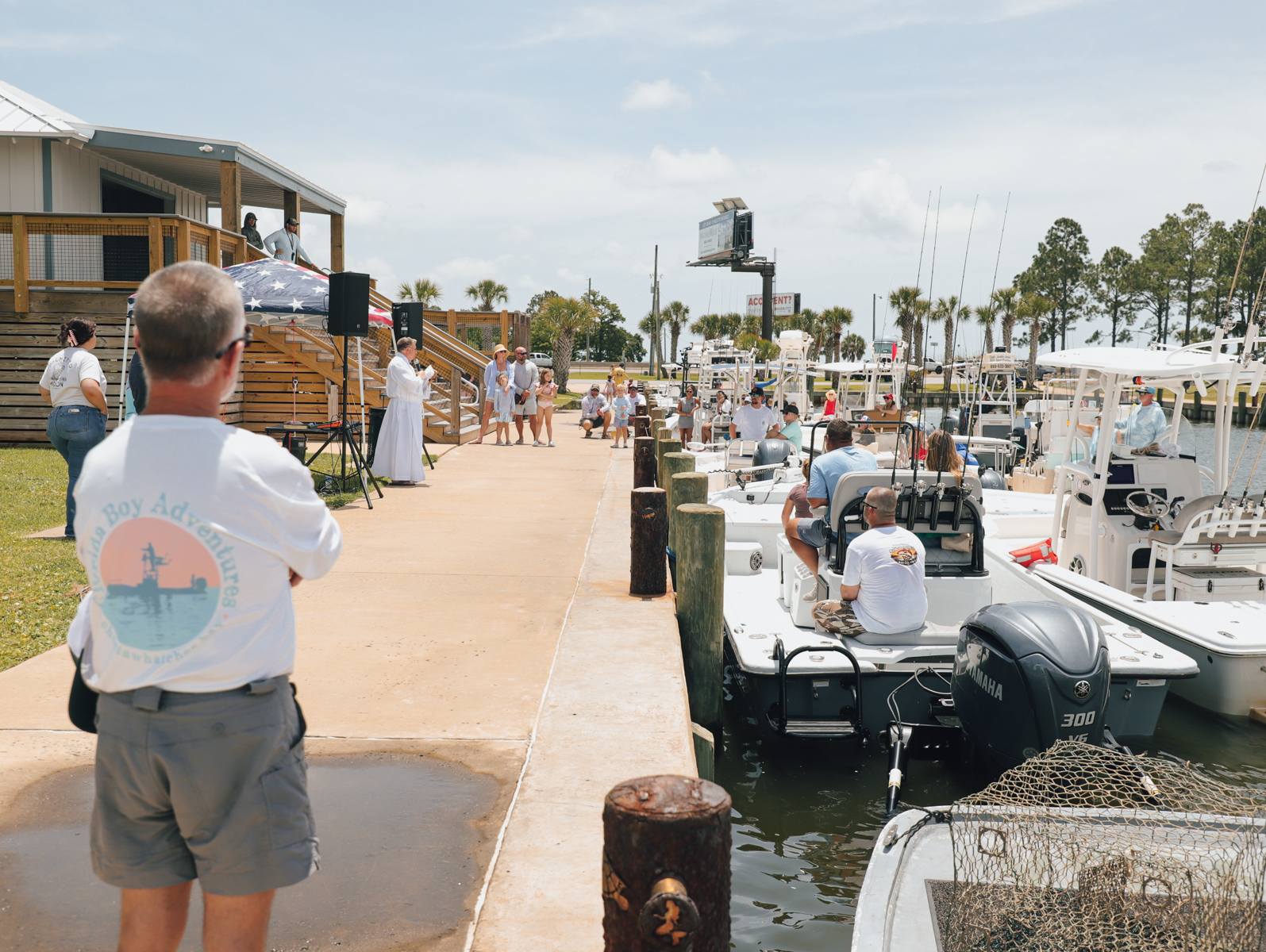
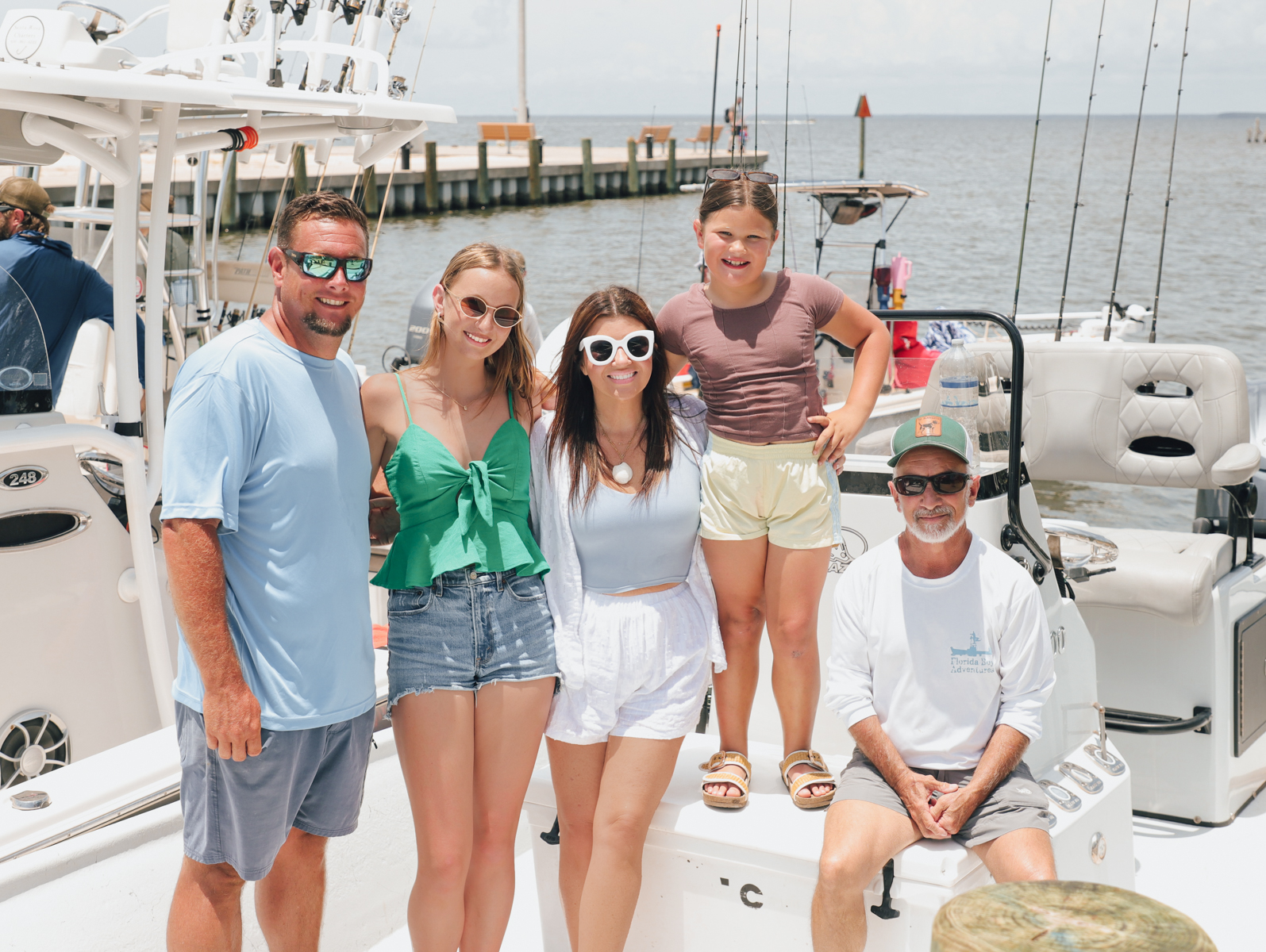
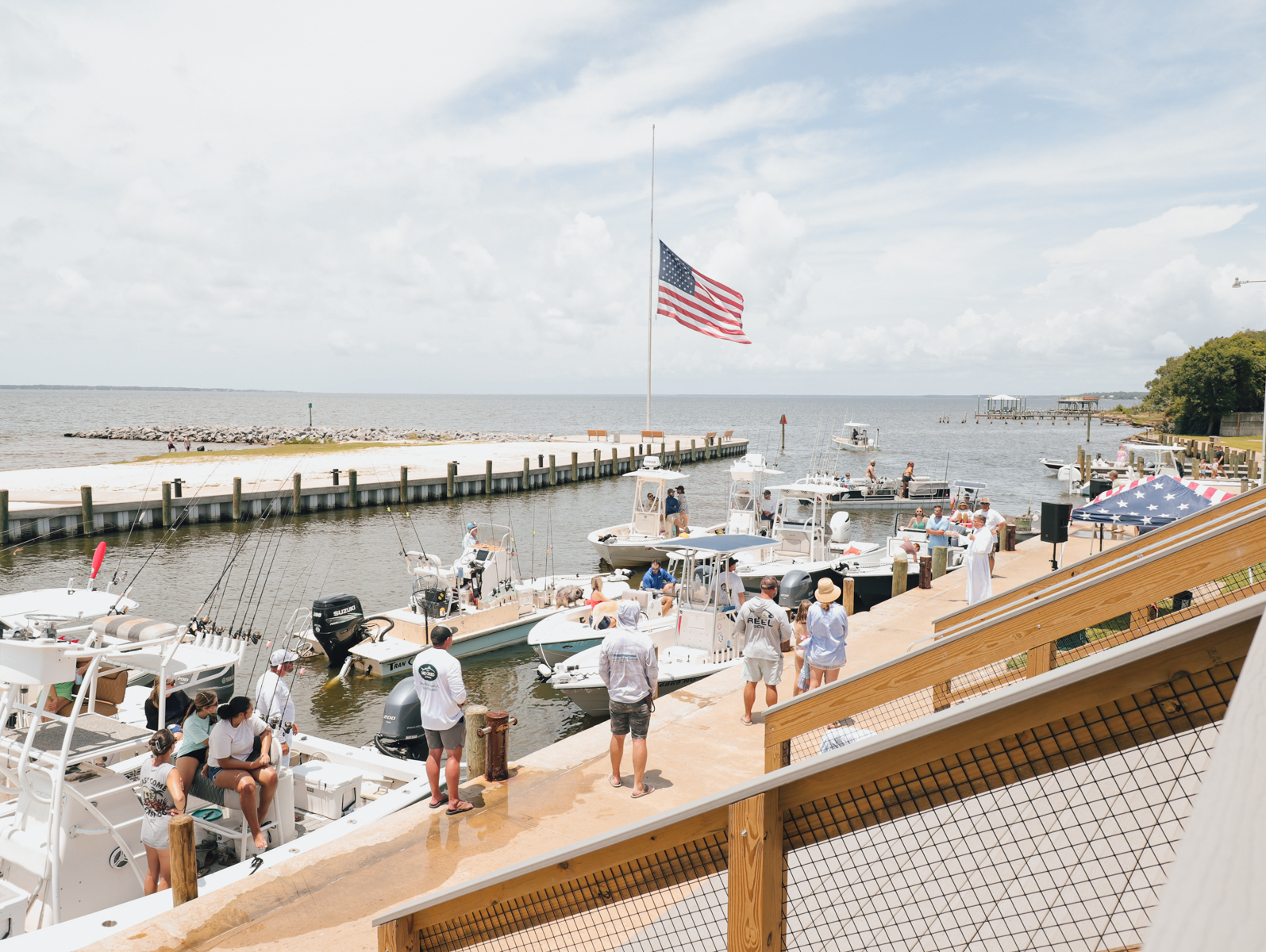
On Memorial Day weekend of 2026, Hunter Ray organized the first Blessing of the Fleet in Walton County’s history.
It is worth pausing on that for a moment, because the Walton County fishing community is not, by reputation, an easy crowd to gather. Other areas like along the Destin Harbor offer an easy sense of community with dedicated dock space and a history of commercial fishing. In Walton County, the charter guides share the water but not always the built-in systems. It’s a bit more scrappy. Competition runs deep and camaraderie among men who work the same territory is earned slowly and lost quickly.
The gathering managed to bring more than twenty boats together for the event. A priest came and blessed the fleet. It was the first time anything like it had happened in Walton County, and the reason it happened is inseparable from who Hunter Ray is: a man with deep enough roots and genuine enough relationships that even the most guarded captains on the bay showed up.
Most of those captains have been here fewer than ten years. Some fewer than five. Hunter’s family has been here for five generations.
His daughters are being raised the same way.
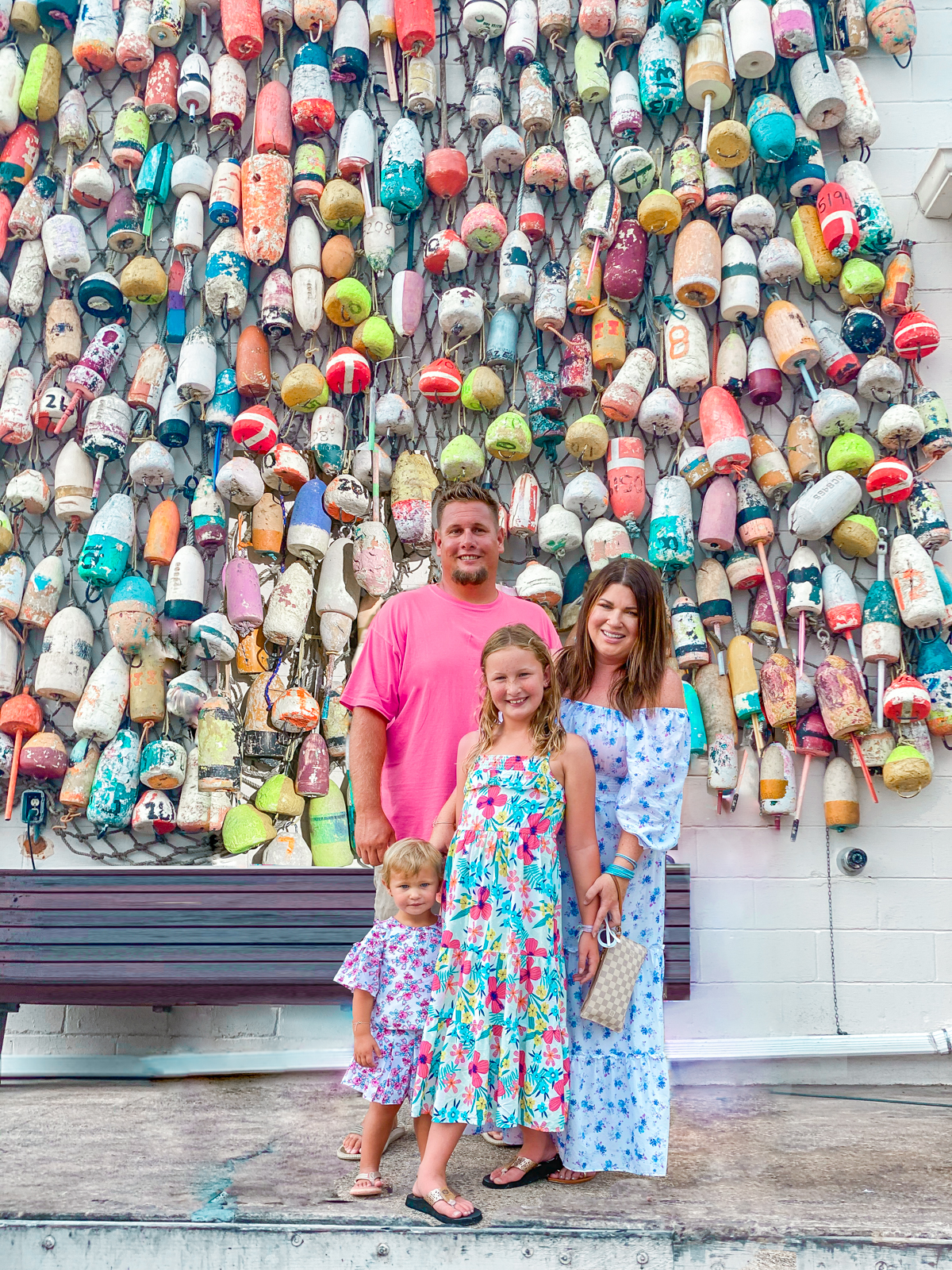
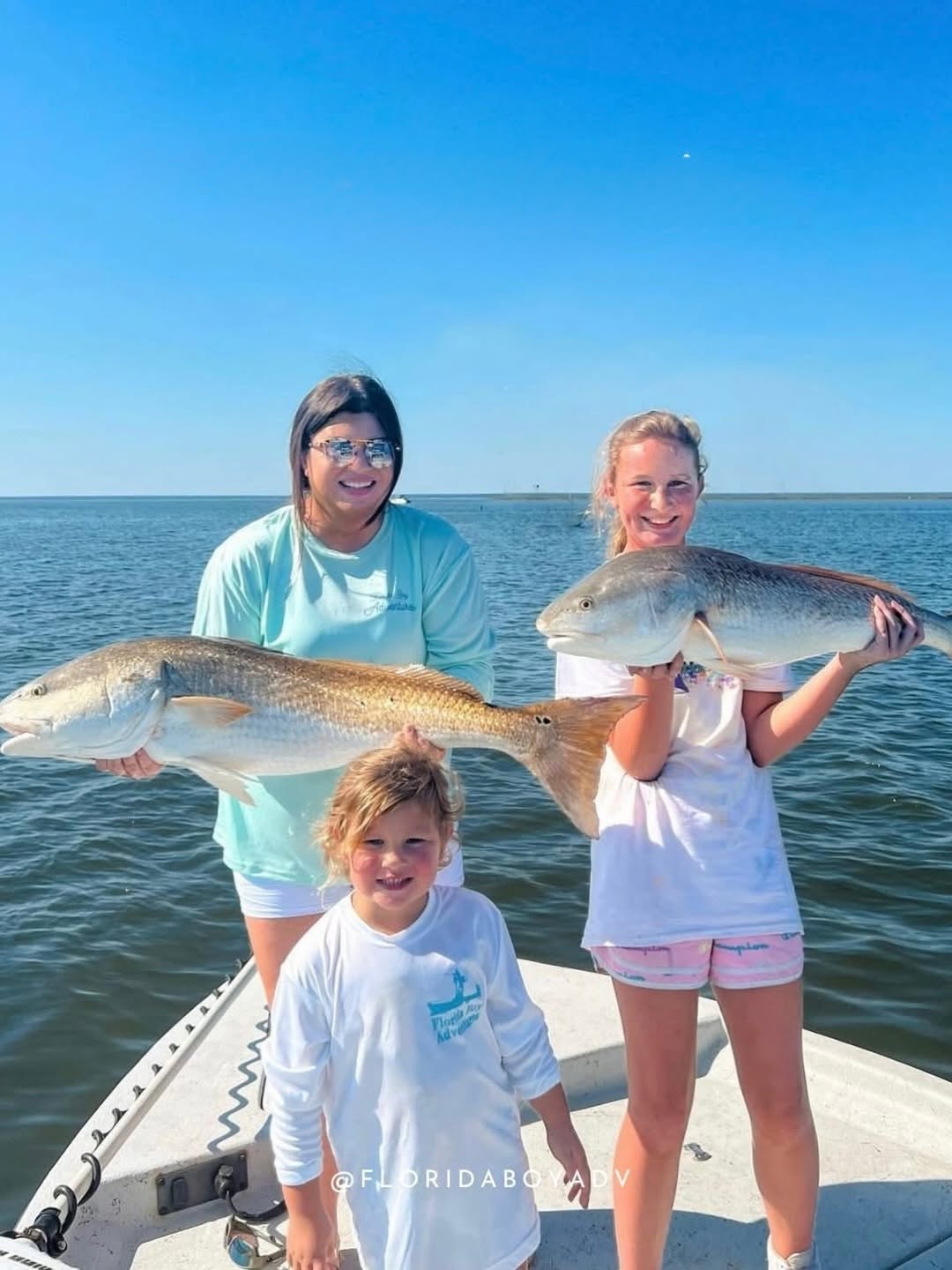
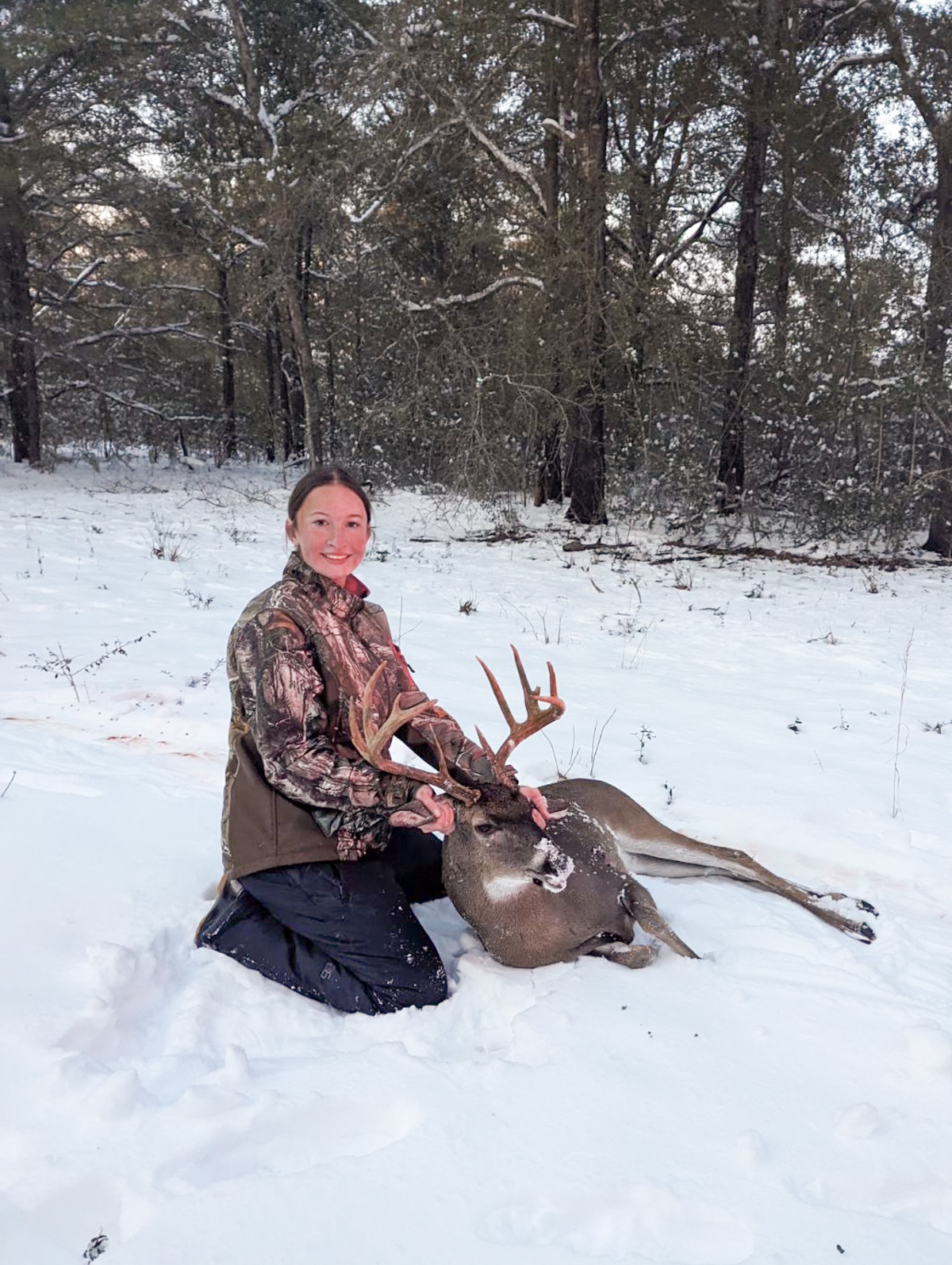
Emery Ray is fifteen, and she is, by any reasonable measure, an outdoorswoman. She hunts and fishes with the same matter-of-fact competence that her father and great-grandfather brought to it, the kind of ease that only comes from having done something since you were small. In January of 2025, on one of north Florida’s rare snow days (the kind that comes once in a lifetime and causes the whole Panhandle to stop and stare) Emery killed a massive buck on the family’s property in north Walton County. The rack hangs as a testament to what happens when you grow up taking the outdoors seriously.
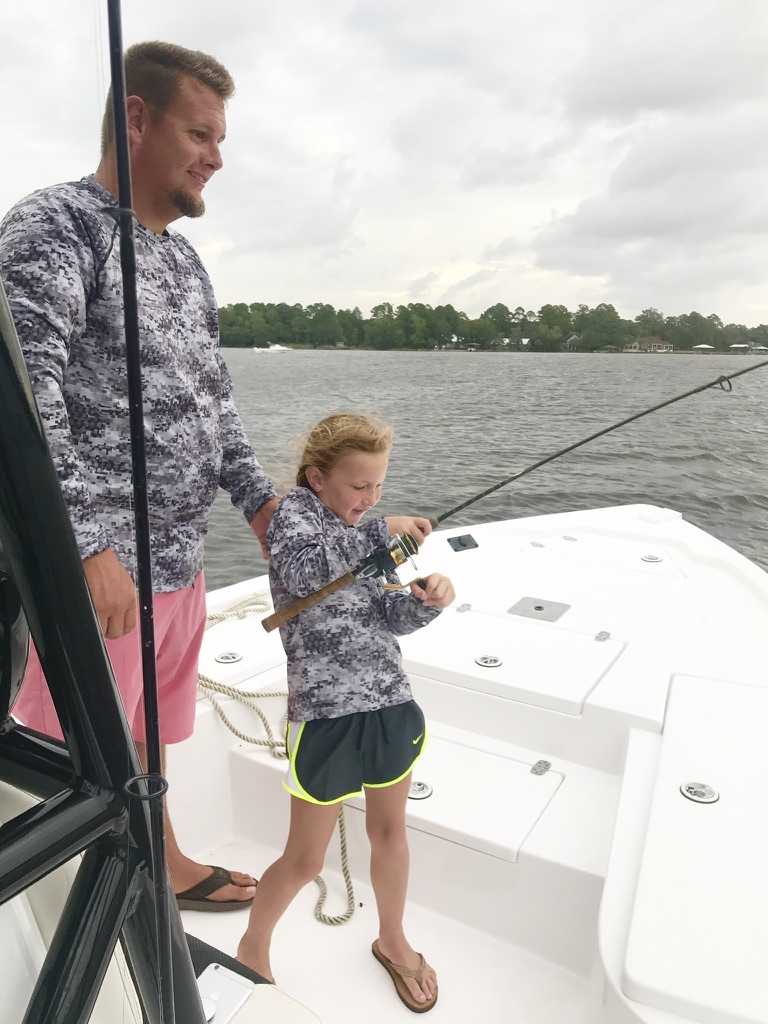
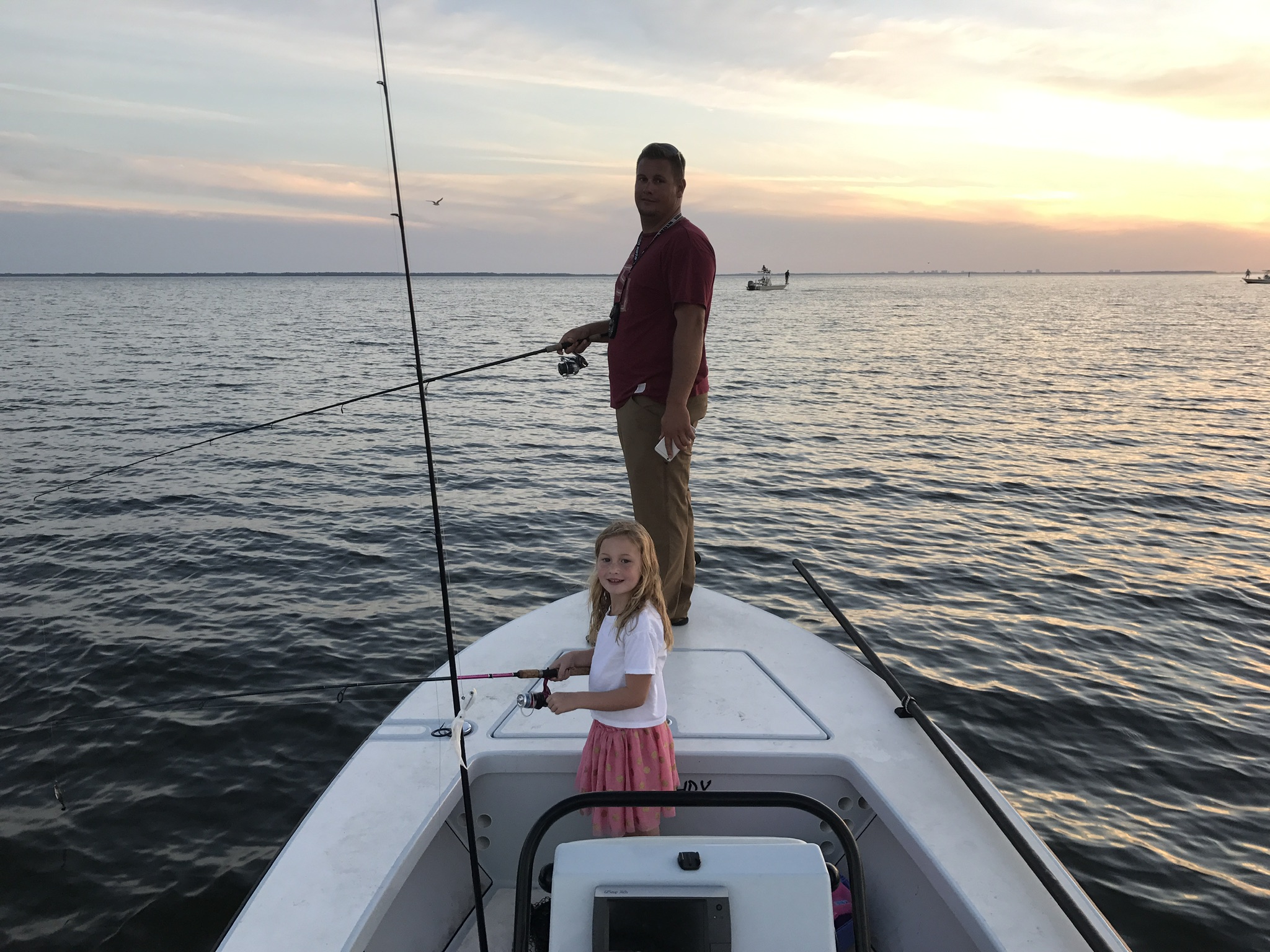
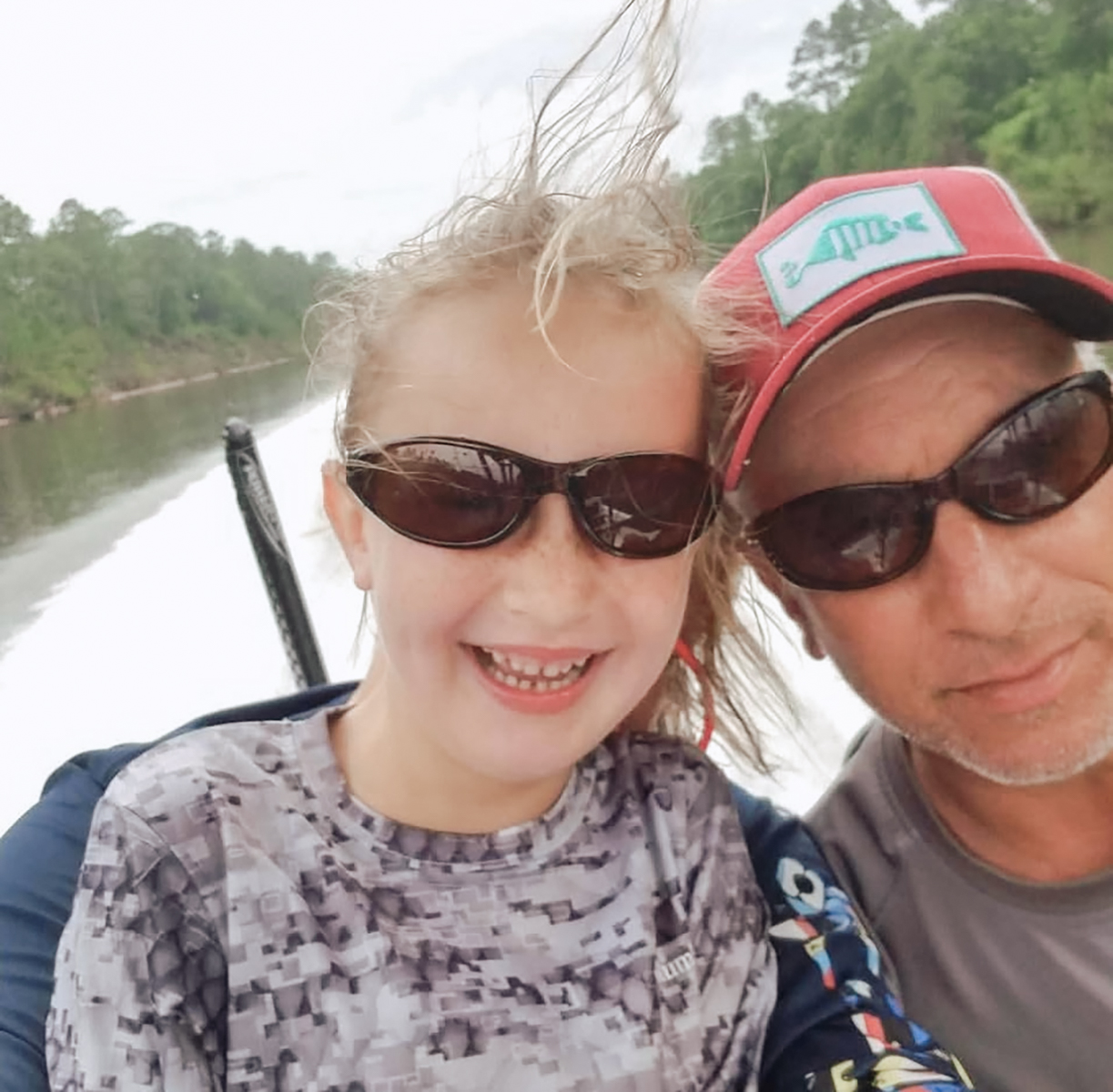
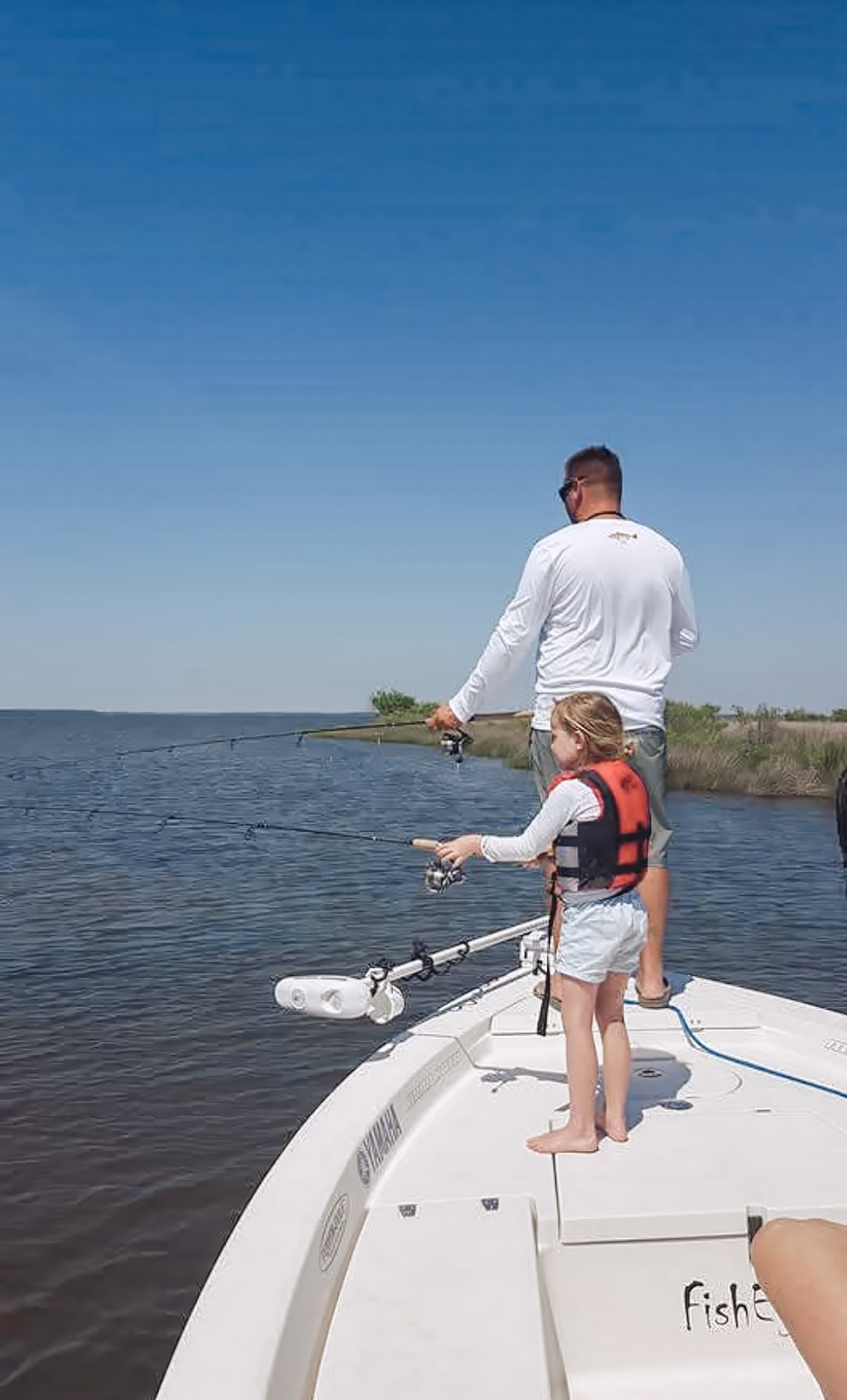
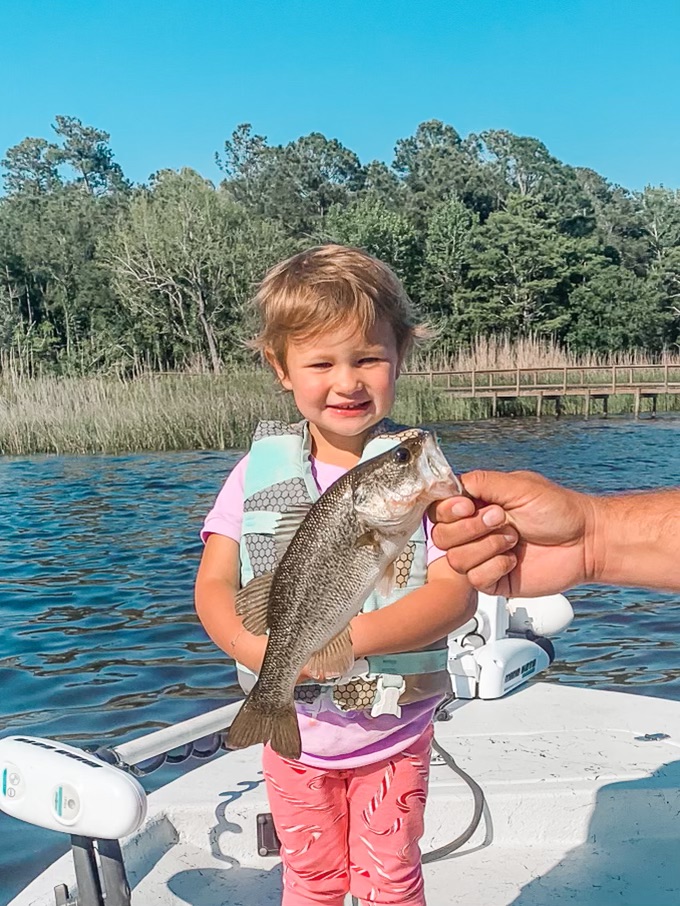
Her younger sister Collins, eight years old, is already on the water. She carries the same “never meet a stranger” charisma of her great-great-grandfather Chat Holley and loves to tell one of her first fishing stories. The childcare wires had gotten crossed, so to speak, and while Jami was away working on a client project, Collins had no choice but to hop on a charter with Hunter as something of a “first mate” for the afternoon. Hunter gets to a spot, hands out the rods for clients to cast and next thing he knows, Collins is reeling in her first ever bass.
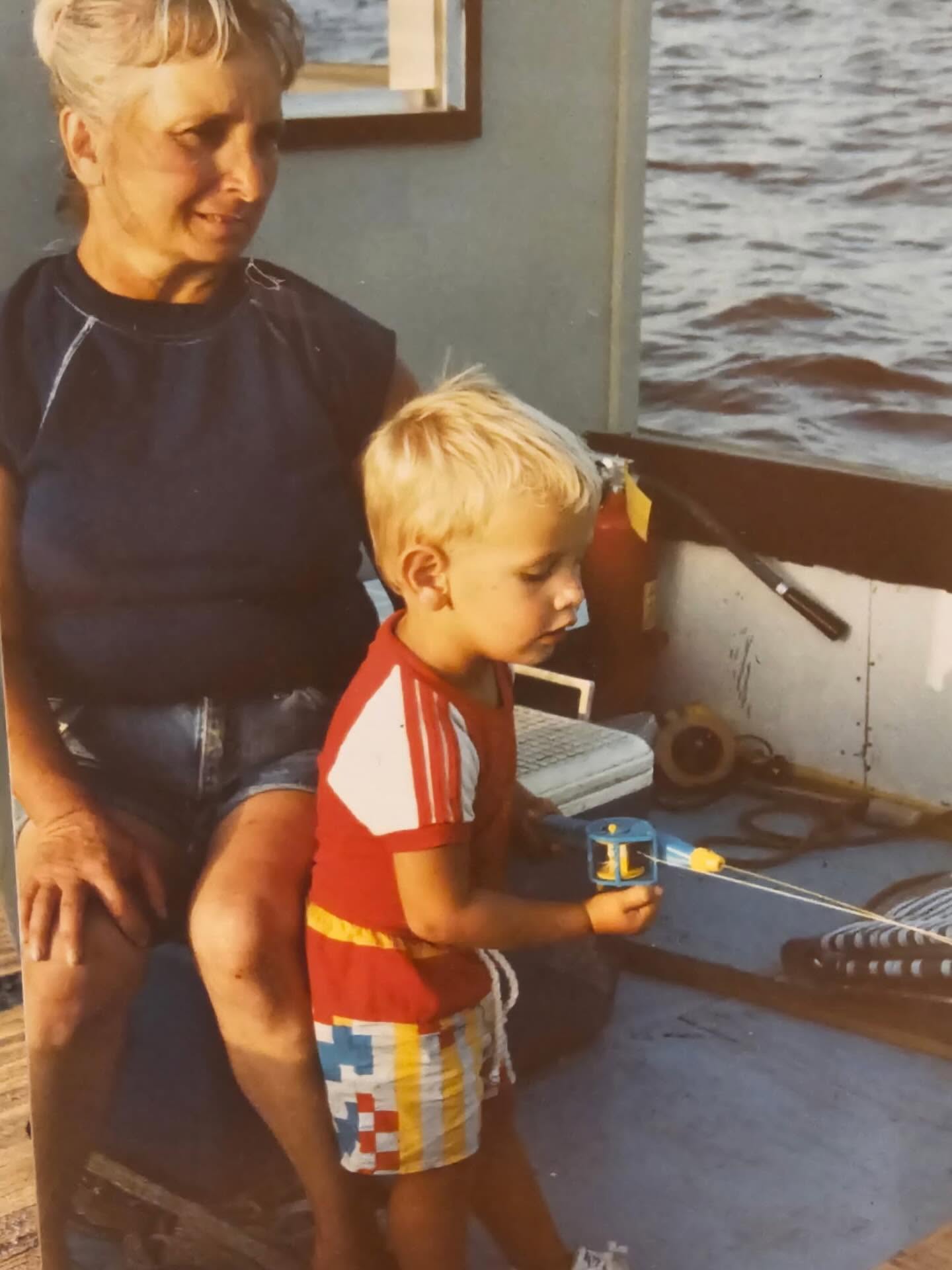
It’s not that different than a young Hunter, pictured as a toddler on the deck of the Lil Chat, squinting into the Gulf Coast light. There is another one of him as a boy on the Choctawhatchee River with his grandfather Charles. There is one of Gilbert, young and unguarded, on a tugboat in a bay that had not yet been discovered. It’s a recurring theme.
The bay has been discovered now. The road signs are different, the waterfront is crowded, the beach debates continue and on any given summer morning there are more boats out there than Charles Ray would have believed possible. But if you look carefully, one of those boats belongs to a man who grew up on these waters before they were viral TikTok’s touting the destination, whose family’s name is literally on a road in the old, quiet part of the county, and who was up before dawn this morning to catch bait before you finished your coffee.
He knows exactly where to go.
Florida Boy Adventures offers inshore fishing charters on the waters of 30A and Choctawhatchee Bay, with two-, three-, and four-hour trips, seasonal river tours, sunset cruises, and a weekly Kids Adventure Camp during summer. Captain Hunter Ray is Coast Guard certified and has been guiding these waters since 2010. Book at floridaboyadventures.com.